Montanejos - Puebla de Arenoso
A route through the Alto Mijares region, following the gorges of the River Mijares between Montanejos, Puebla de Arenoso and Cortes de Arenoso. Endless bends, stunning canyons and turquoise waters.
Checking the route…
Roadbook
5 points- Start
Castellón de la Plana
Montanejos
Natural hot springs in a spectacular canyon.
ViewpointPuebla de Arenoso
A village on the banks of the Arenoso reservoir.
VillageCortes de Arenoso
A hilltop village in the Alto Mijares region.
Village- Finish
Castellón de la Plana
Take the route to Google Maps
- Castellón de la Plana
- Montanejos
- Puebla de Arenoso
- Cortes de Arenoso
- Castellón de la Plana
We add waypoints from the GPX so Google Maps sticks to the route's roads (they show up as extra stops). To follow the exact track, use the GPX.
Highlights
- 01Hot springs and the Mijares River Gorge in Montanejos
- 02Arenoso Reservoir: bends in the road with views of the turquoise water
- 03Cortes de Arenoso: a village perched high above the valley
- 04CV-20 and other highly technical regional routes
About this route
Montanejos is one of those places where the landscape creates something extraordinary within just a few metres. The River Mijares, as it flows down from the mountains of Teruel towards the Mediterranean, has carved out a narrow canyon over thousands of years right in the heart of the Sierra de Espadán, and at the heart of that canyon, gushing directly from the ground through limestone fissures, lies the famous Fuente de los Baños: a natural hot spring that maintains a constant temperature of 25°C all year round, whatever the season. In winter, when the air temperature is 5°C, the thermal contrast creates a spectacular mist that envelops the entire gorge in an almost cinematic mystery.
The baths at Montanejos are not a modern discovery. The thermal waters of the River Mijares were already known and used during the Al-Andalus period (8th–13th centuries), when the first bathing pools, carved out of the rock, were constructed. Local legend has it that the Moorish king of Valencia, Zayd Abu Zayd, ordered a spa to be built in the 13th century so that his odalisques could enjoy the waters, and there are Christian documents from the 14th century confirming its existence and use. Today, the waters are entirely open to the public and free of charge: any visitor can step into the river’s natural pools and enjoy the warm water whilst taking in the views of the canyon.
The CV-195 road between Jérica and Montanejos is probably one of the top five motorcycling routes in the whole of the Valencian Community. Over 30 km of continuous bends, with the tarmac generally in good condition, not a single straight stretch worth mentioning, and winding through the spectacular woodland landscape of the Sierra de Espadán Natural Park. The mountain range is an ecological rarity: it is the only area in the east of the Iberian Peninsula where cork oaks (Quercus suber) – normally associated with the Atlantic west of the peninsula – still survive, thanks to a special microclimate that maintains the humidity required for this species. Riding past cork oaks on a Valencian motorbike route is an unexpected visual treat.
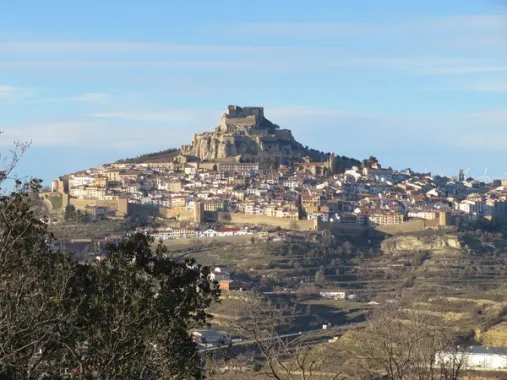
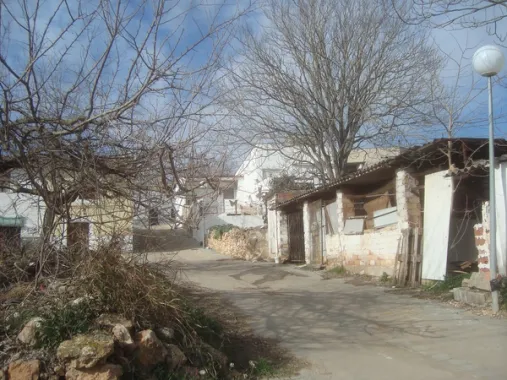
Cortes de Arenoso and Puebla de Arenoso, the two villages in the Alto Mijares region that mark the end of the circuit, are hidden gems high up in the hills. Cortes lies at an altitude of around 980 metres, perched on a hillside with sweeping views over the Mijares valley and the Sierra de Espadán; Puebla lies on the shores of the Arenoso reservoir, in one of the most photogenic corners of inland Castellón. Both villages suffered severe depopulation during the 20th century — falling from several thousand inhabitants to barely 200 in each — and for that very reason they retain their rural architecture intact: stone houses, cobbled alleyways and a genuine rural atmosphere.
Motorcycling tips: the best times of year are spring and autumn; in the height of summer it gets very hot in the canyon (temperatures of 35°C are common) and the pools get very crowded. In winter there’s a risk of ice at higher altitudes, but the main climb up the CV-195 is usually clear. Fill up with petrol in Jérica or Onda. And here’s a tip: if you’re planning to take a dip in the pools, it’s best to do so first thing in the morning or at sunset to avoid the midday crowds. The water at 25°C in winter, with mist floating over the canyon, is one of the most sensory experiences you can have on a motorbike in the middle of a Valencian January.
Practical information
Weather
A hot summer in the canyon. Ice is possible at higher altitudes in winter. Spring and autumn are ideal.
Traffic
Traffic is light during the week. At weekends, Montanejos attracts tourists because of its thermal spas.
Fuel stops
Petrol stations in Onda, Montanejos and Rubielos de Mora (near Teruel).
Where to stay on this route
The towns this route passes through — useful for splitting it into stages or sleeping near the start. Book ahead in high season.
- Puebla de ArenosoSee places to stay
- Cortes de ArenosoSee places to stay
- Castellón de la PlanaSee places to stay
Affiliate links: if you book through them, Nomadiq earns a small commission at no extra cost to you.
Published on