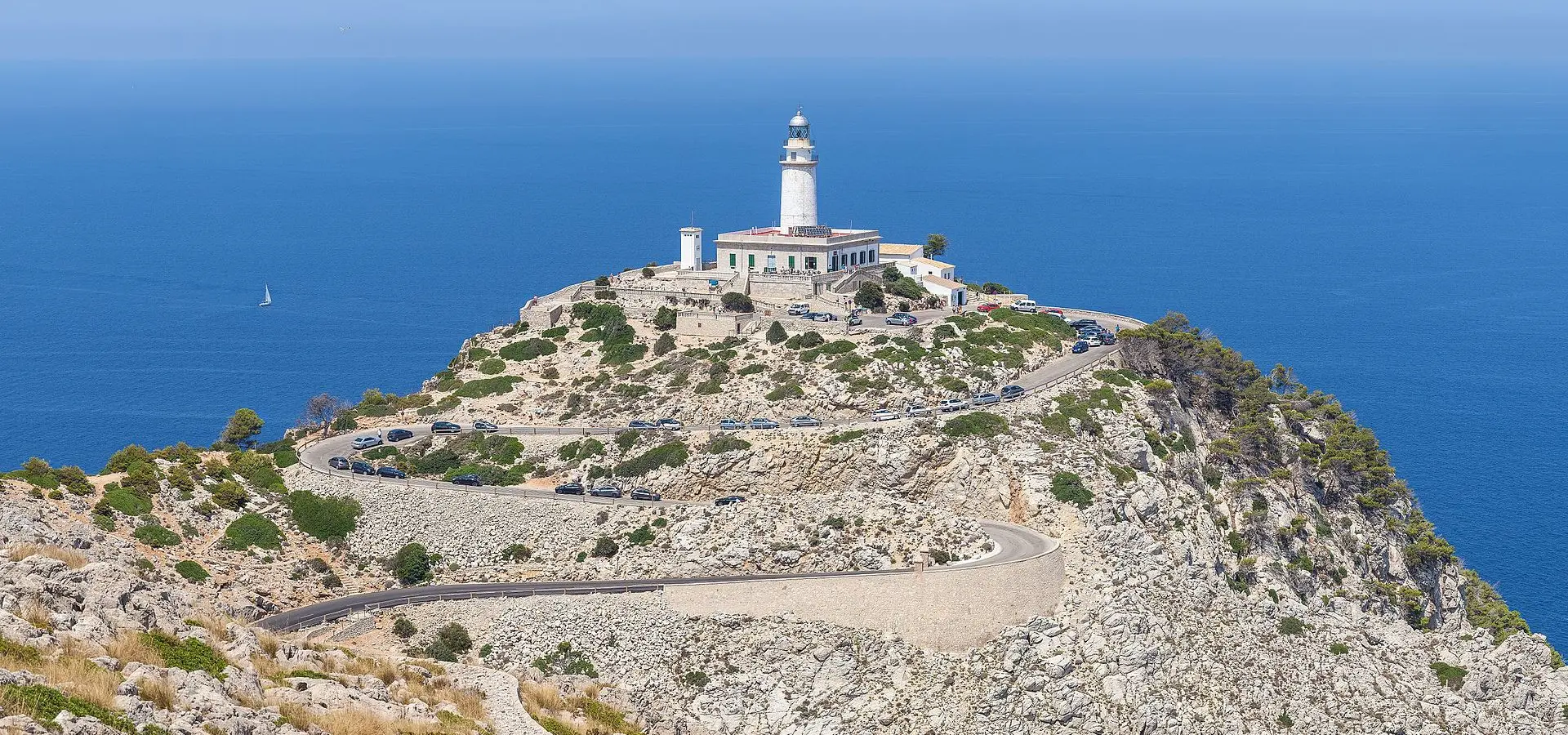
Mallorca: Cap de Formentor, Alcúdia and Pollença
Best Season
Mediterranean. Strong wind at Formentor. Accessible all year.
The road to Cap de Formentor, Mallorca's northernmost point: vertiginous cliffs, the iconic lighthouse, and back through Alcúdia and Pollença, two of the island's most elegant towns.
Highlights
- 1Cap de Formentor: cliffs and an iconic lighthouse
- 2Mirador de Es Colomer: Mallorca's most famous view
- 3Pollença: culture, El Calvari and a music festival
- 4Alcúdia: walls and the only Roman theatre in the Balearics
About this route
The road to Cap de Formentor (Ma-2210) is one of the most spectacular coastal routes in the whole Mediterranean. From Port de Pollença it climbs quickly onto the spine of the Formentor peninsula, a rocky tongue of land reaching 20 km out to sea with cliffs dropping more than 300 metres on both sides. On clear days, from the Mirador de Es Colomer — the most photographed spot in Mallorca after Palma Cathedral — you can see Menorca on the horizon, 40 km away.
The Cap de Formentor lighthouse, at the tip of the peninsula, is a white building raised in 1863 on a 210-metre cliff. The road out to it threads between wind-twisted pines and grey limestone, with tunnel sections cut into the rock and bends that open onto utterly overwhelming views of the open sea. It is one of those roads you ride slowly, stopping at every viewpoint, because every corner offers a different and equally spectacular view.
Pollença is among the most elegant and cultured towns in Mallorca. Its old quarter keeps cobbled streets lined with manor houses, the church of Nostra Senyora dels Àngels with its magnificent Gothic rose window, El Calvari — a stairway of 365 steps climbing to a hermitage with views over the valley — and an active cultural life: the Pollença Music Festival, held each summer in the cloister of the Santo Domingo convent, is one of the most prestigious classical music festivals in Spain.
Alcúdia, a few kilometres from Pollença, is Mallorca's most important walled town. Its 14th-century medieval walls, reinforced in the 16th on the orders of Philip II, enclose an old quarter of manor houses, Gothic churches and a Roman theatre — the only one in the Balearics. The Tuesday and Sunday markets in the historic centre are among the liveliest on the island, with local produce, crafts and freshly baked Mallorcan ensaimada, the island's most famous pastry.
Practical notes: the road to Cap de Formentor closes to private traffic in summer (July-August) from 10:00 to 19:00, with a shuttle bus instead, so go early or out of season. Wind on the peninsula ridge can be fierce. For food, in Pollença the Restaurante Clivia — in a 17th-century house — serves creative Mediterranean cooking with local produce. Mallorcan sobrasada and tumbet (the island's ratatouille of potato, aubergine and pepper) are essential.
Route stops
Mirador de Es Colomer
Viewpoint
Mallorca's most famous panorama, views of Menorca.
Faro del Cap de Formentor
Monument
1863 lighthouse on 210 m cliff, Mallorca's northernmost point.
Pollença
Village
Elegant town: Calvary steps, Gothic church and music festival.
Alcúdia
Monument
Walled city with Roman theatre and market.
Practical information
Weather
Mediterranean. Strong wind at Formentor. Accessible all year.
Traffic
Formentor closed to traffic in summer (10am-7pm). Go early or in off-season.
Fuel stops
Petrol stations in Puerto de Pollença and Alcúdia.
Where to stay on this route
The towns this route passes through — useful for splitting it into stages or sleeping near the start. Book ahead in high season.
- Faro del Cap de FormentorSee places to stay
- PollençaSee places to stay
- AlcúdiaSee places to stay
Affiliate links: if you book through them, Nomadiq earns a small commission at no extra cost to you.
Related routes
Mallorca: Serra de Tramuntana and the Legendary Ma-10
Balearic Islands
Costa Brava: Tossa, Sant Feliu and Begur
Catalonia
Montseny: Barcelona's #1 Motorcycle Getaway
Catalonia
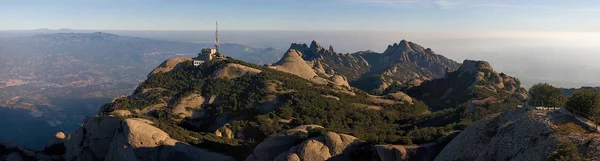
Montserrat: monastery and roads
Catalonia