Picos de Europa: Liébana and Fuente Dé
Best Season
Snow at altitude in winter. Best from May to October.
Cantabria's Liébana with Potes, Fuente Dé and the cable car to the El Cable viewpoint. The southern face of the Picos along technical roads with alpine scenery.
Highlights
- 1La Hermida Gorge
- 2Potes and Liébana
- 3Fuente Dé and the cable car to El Cable
- 4San Glorio Pass (1,609 m)
About this route
La Liébana is a fascinating region for a geographical reason: it is a Mediterranean microclimate nestled right in the heart of the Cantabrian Mountains. Whilst the whole of the north of the peninsula is green, rainy and Atlantic in character, Liébana — a deep valley sheltered by the Picos to the north and the Cantabrian mountain range to the south — receives barely half the rainfall of Santander, has a higher average annual temperature, and is suitable for growing grapes used to make wine and, above all, the famous Orujo de Potes. This climatic and topographical isolation has given rise to a distinct culture: during the Middle Ages, Liébana was a small, virtually independent kingdom, and even today its inhabitants feel more like Liébanos than Cantabrians.
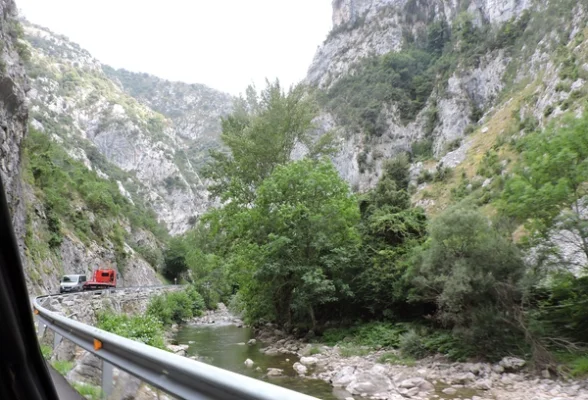
To reach Potes, the capital of Liébana, you have to pass through the Hermida Gorge, one of the most spectacular river gorges in Europe. It is more than 20 km of winding road wedged between vertical walls up to 600 m high, with the River Deva rushing violently at the bottom. The N-621 road that runs through it is narrow, technically challenging and absolutely cinematic: motorcyclists feel as though they are riding along the bottom of a gigantic crevice in the Earth’s crust. In winter, when the sun is low, the rays bounce off the limestone walls, creating surreal colour effects.
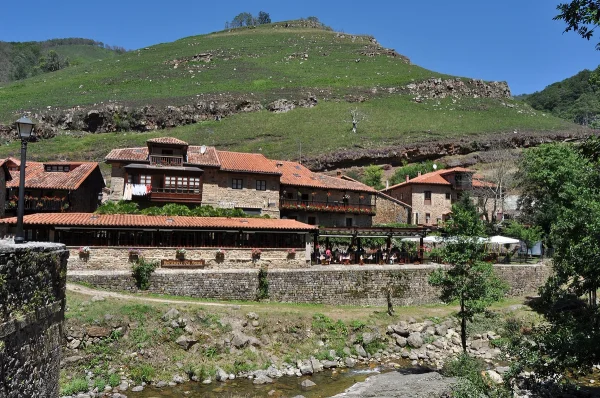
Potes itself is one of the most authentic medieval towns in the north of the Iberian Peninsula. Its 15th-century Torre del Infantado is the last remaining part of the fortress of the valley’s former lords, and the historic centre — with its bridges over the River Deva, its stone houses with wooden galleries and its centuries-old taverns — is remarkably well preserved. Saturday is market day and the village comes alive in a special way: farmers from the valleys come down with their cheeses (here they make ‘quesucos de pastor’ that rival any European speciality), pomace brandy producers open their stills to the public, and the restaurants fill up at the time for ‘cocido lebaniego’, the region’s sacred dish.
The Lebaniego-style cocido deserves a section of its own. It is a Cantabrian version of the Madrid-style cocido, but with three soups instead of one and featuring a star ingredient: the Potes chickpea, a small, very buttery chickpea that is still grown on the terraced fields of the valley and which has Protected Geographical Indication status. Eating it in a cider house in Potes in the depths of winter, after a morning’s motorbike ride in the freezing rain, is one of those culinary experiences that make the journey well worth it. Some recommended restaurants: La Casona in Potes, or the Mesón del Cocido in Camaleño, three kilometres from the village.
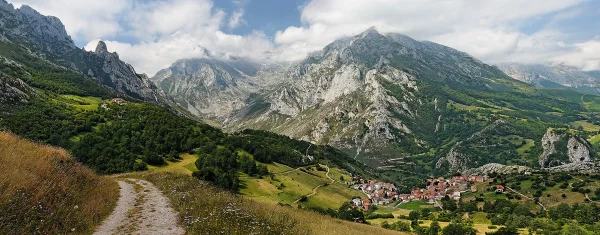
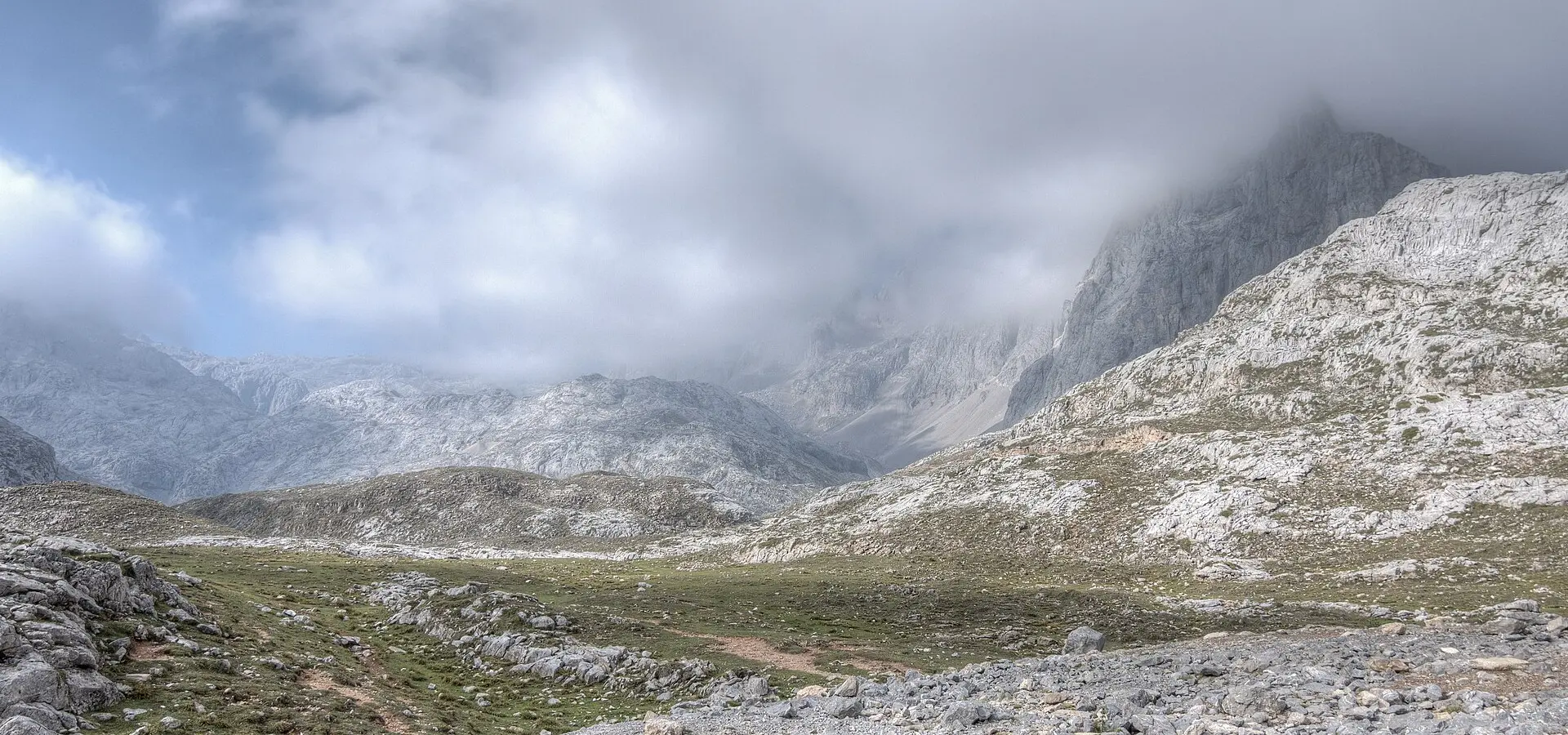
But the highlight of the route is Fuente Dé. This spot is probably the most spectacular vantage point in the Picos de Europa: a perfect glacial cirque surrounded by vertical walls 1,500 m high, with a cable car — the famous Fuente Dé cable car, opened in 1966 — which takes just four minutes to climb from the bottom of the valley to the Mirador del Cable at 1,823 m. The difference in altitude (over 750 metres vertically) over a distance of just 1,500 metres horizontally makes it one of the steepest cable cars in Europe. The views from the top – fog permitting – are unforgettable: the entire Central Massif of the Picos at your feet, and to the south the Cantabrian mountain range fading into the horizon. A crucial tip: go first thing in the morning to avoid queues (there can be waits of up to two hours in August) and to maximise your chances of clear skies, as clouds tend to rise from the valley by mid-morning.
Route stops
Desfiladero de La Hermida
Viewpoint
Impressive canyon leading to Potes.
Potes
Village
Capital of the Liébana region.
Fuente Dé
Viewpoint
Cable car to the El Cable viewpoint.
Practical information
Weather
Snow at altitude in winter. Best from May to October.
Traffic
Moderate traffic in summer.
Fuel stops
Petrol stations in Unquera, Potes and Riaño.
Where to stay on this route
The towns this route passes through — useful for splitting it into stages or sleeping near the start. Book ahead in high season.
- PotesSee places to stay
- San Vicente de la BarqueraSee places to stay
Affiliate links: if you book through them, Nomadiq earns a small commission at no extra cost to you.