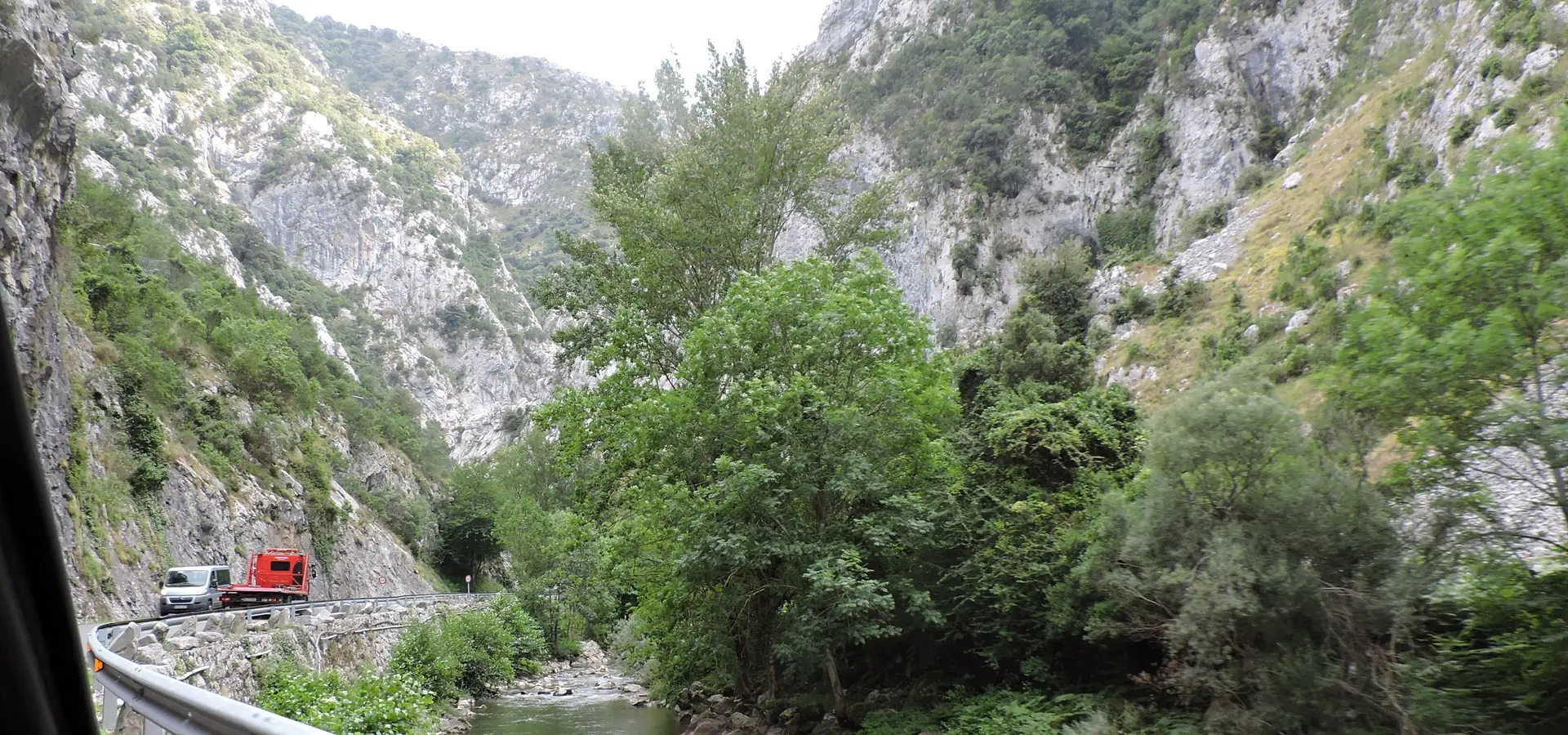
La Hermida Gorge: The Complete Experience
Best Season
Cantabrian: frequent rain. The gorge stays cool. Best May-October.
La Hermida Gorge, Spain's longest (21 km), with secret detours to Bejes (picón cheese), Tresviso (Cantabria's most isolated village) and La Hermida hot springs.
Highlights
- 1Desfiladero de La Hermida: 21 km, Spain's longest gorge
- 2Tresviso: Cantabria's most isolated village (700 m climb)
- 3Queso picón Bejes-Tresviso: blue cheese aged in caves
- 4Natural hot springs beside the Río Deva
About this route
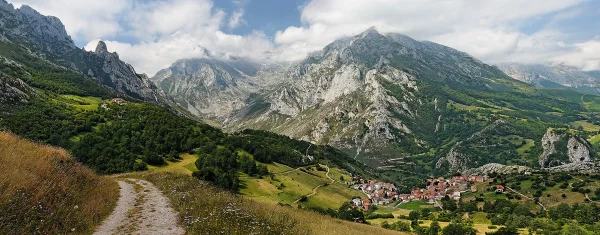
The Desfiladero de La Hermida is the longest gorge in all of Spain: 21 kilometres of road (N-621) hemmed between limestone walls that rise vertically up to 600 metres on either side of the Río Deva. It is the natural gateway to the Picos de Europa from the Cantabrian coast, and riding through it on a motorbike is a fully immersive experience: the rock closes off the sky, the river roars below, the road twists through rock tunnels and ledge-hugging stretches, and the light shifts constantly with the time of day and the angle of the walls.
What many riders don't know is that the gorge has lateral turn-offs leading to some of the most isolated and spectacular corners of all Cantabria. The detour to Tresviso (CA-786) is the most extreme: an 8 km mountain road that climbs 700 metres of elevation with hair-raising bends and no guardrails, ending at a village of 50 inhabitants literally clinging to the wall of the Picos de Europa at 900 metres altitude. Tresviso is the most isolated village in Cantabria, and the queso picón Bejes-Tresviso made here — a blue cheese aged in natural caves — is one of Cantabria's gastronomic treasures.
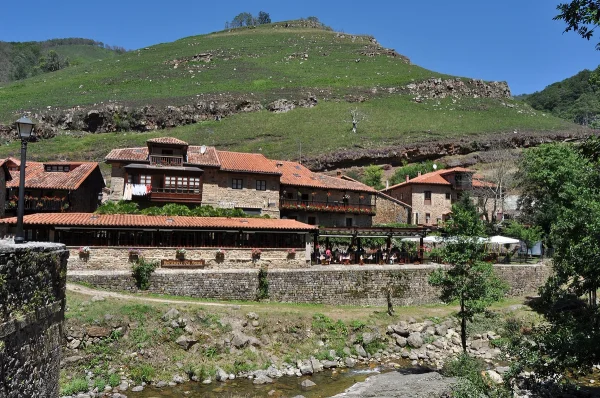
Bejes, another lateral detour off the gorge, is a stone hamlet in an interior valley where the other variety of picón cheese is produced. The village preserves a cluster of traditional Cantabrian stone houses with heraldic shields and a Romanesque church that hint at a more prosperous past. The road connecting Bejes to La Hermida is narrow and very lightly travelled — perfect for the rider seeking solitude.
The hot springs of La Hermida are a well-kept secret: a natural hot-water spring (36°C) that surfaces beside the Río Deva in the heart of the gorge. The spa (now closed and in ruins) was famous in the 19th century, but the natural pools by the river remain accessible and offer a luxurious soak in a canyon setting that feels positively Jurassic.
Practical riding info: the gorge is open year-round but rockfalls can occur in winter. The N-621 is a good road but narrow, with truck traffic heading to Potes. The detour to Tresviso is technical and demands experience (18% gradients, blind corners, no guardrails). Fuel stations in Panes, Potes and Unquera. For food, Potes serves cocido lebaniego (chickpea stew with cured meats and stuffing) and orujo de Liébana (Spain's most celebrated grape-pomace spirit, produced in over 40 artisanal stills) — both unmissable.
Route stops
La Hermida
Village
Heart of the gorge, natural hot springs.
Tresviso
Village
Cantabria's most isolated village, artisan picón cheese.
Bejes
Village
Stone hamlet, origin of picón Bejes-Tresviso cheese.
Practical information
Weather
Cantabrian: frequent rain. The gorge stays cool. Best May-October.
Traffic
N-621 with moderate traffic (trucks). Detours to Tresviso and Bejes traffic-free.
Fuel stops
Petrol stations in Panes, Potes and Unquera. No petrol station in the gorge.
Where to stay on this route
The towns this route passes through — useful for splitting it into stages or sleeping near the start. Book ahead in high season.
- La HermidaSee places to stay
- TresvisoSee places to stay
- BejesSee places to stay
Affiliate links: if you book through them, Nomadiq earns a small commission at no extra cost to you.