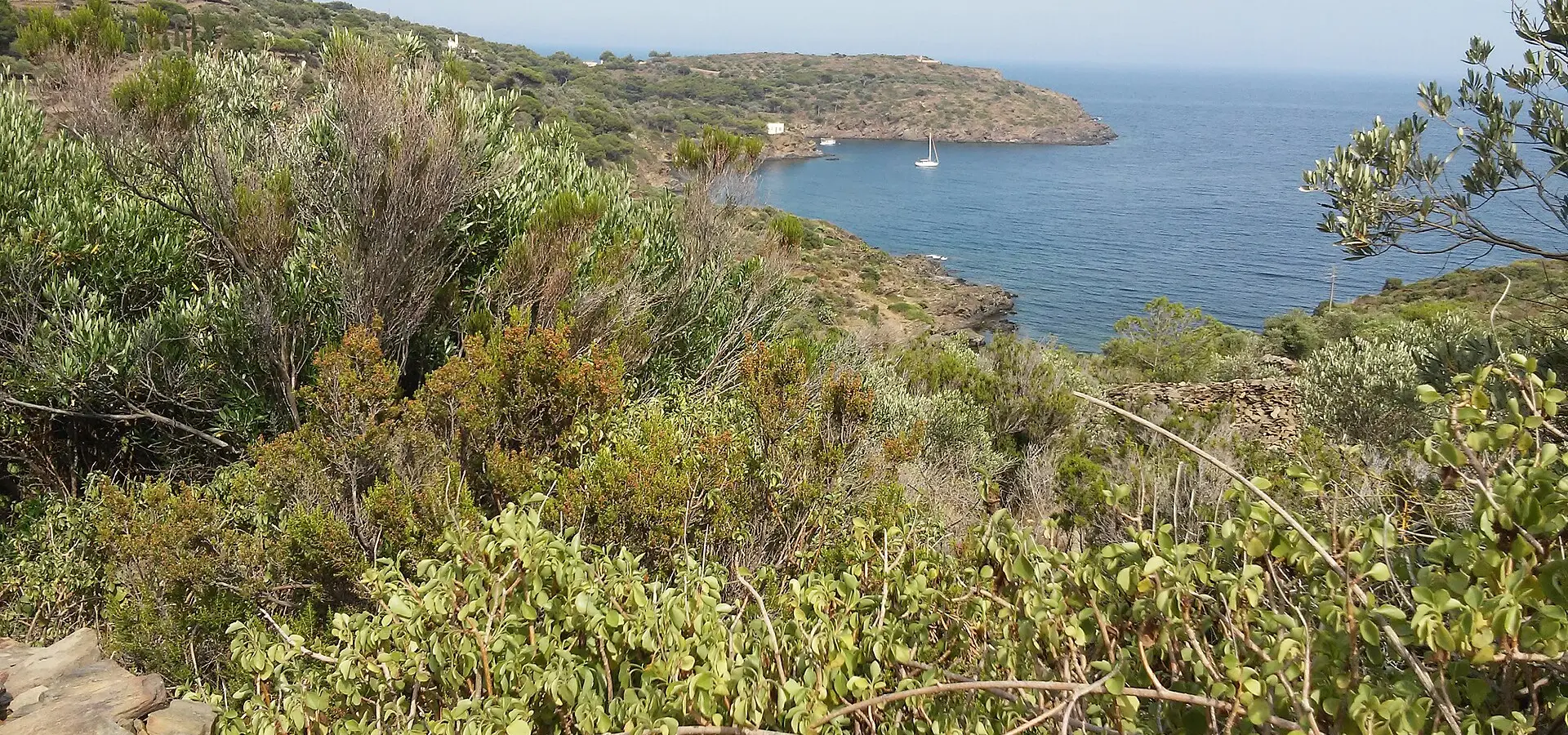
Cap de Creus and Empordà
Best Season
Good route all year round. Beware of the tramuntana, very strong north wind.
The easternmost tip of the peninsula: Cap de Creus, with its lunar landscape and mythical lighthouse. Visit to Cadaqués, the village of Dalí, and the Romanesque monastery of Sant Pere de Rodes.
Highlights
- 1Cap de Creus: the easternmost point of the Iberian Peninsula
- 2Cadaqués and the Dalí House-Museum in Portlligat
- 3Sant Pere de Rodes: a Romanesque church with sea views
- 4A unique landscape shaped by the Tramuntana wind
About this route
Cap de Creus is the easternmost point of the mainland Iberian Peninsula and, at the same time, one of the most unusual and fascinating geological landscapes in the Mediterranean. Here, the Pyrenees do not taper off gently but plunge straight into the sea, forming a rugged and wild headland, with black slate cliffs twisted into almost impossible shapes, coves hidden amongst vertical walls, and a lighthouse perched on a headland where the tramontana wind can reach speeds of 150 km/h in winter. Salvador Dalí, who spent most of his adult life in nearby Portlligat, said that Cap de Creus was “the perfect metaphor for reality”.
Cadaqués is probably the most exclusive and distinctive village on the entire Catalan coast. Its physical isolation — it can only be reached via a narrow, winding road that crosses the Sierra de Pení — kept it untouched by the mass tourism boom of the 1960s and 1970s, and even today it retains the original charm of a whitewashed fishing village with cobbled streets and fishing boats in the small bay. But the real reason for its fame is that it was the centre of Salvador Dalí’s life for over half a century: in Portlligat, a small cove 1 km from the village, he had his home and studio (now a museum, an unmissable visit for anyone with two hours to spare). It was here that he painted some of his most famous works and here that he welcomed figures such as Federico García Lorca, Walt Disney, John Lennon and Mia Farrow.
But Dalí was not the only artist drawn to Cap de Creus. Picasso spent several periods here, as did Marcel Duchamp, and poets such as Paul Éluard wrote about the cape’s special light. That ‘special light’ is not just a tourist marketing ploy: it is a real meteorological phenomenon caused by the almost total absence of atmospheric humidity (thanks to the tramontana, which constantly sweeps away the humid air from the Mediterranean and leaves a crystal-clear atmosphere) combined with the whiteness of the whitewashed houses. The result is a luminous clarity rarely found elsewhere along the Mediterranean coast, and painters have sought it out for over a hundred years.
The Monastery of Sant Pere de Rodes, on the way back south, is one of the most impressive Romanesque complexes in the whole of Catalonia. Founded in the 10th century, for centuries it was one of the richest and most powerful monasteries in the Eastern Pyrenees, and although today it lies partly in ruins, its abbey church remains intact: a Romanesque nave dating from 1022 with carved capitals of extraordinary beauty. The location is truly breathtaking: the monastery clings to the slope of the Verdera massif, at an altitude of 600 metres, with panoramic views across the whole of the Empordà and Cap de Creus in the distance. Visiting on a clear day is a spiritual experience even for the most sceptical.
Riding tips: the road to Cap de Creus is narrow, technical and often buffeted by the tramontana. On days when the wind is strong (particularly from October to March), you should ride with extreme caution as crosswinds can be violent. The best time to visit is from May to October, though it’s best to avoid August due to the crowds of tourists in Cadaqués. Fill up with petrol in Roses or Llançà before heading towards the cape. For dining, the Compartir Restaurant (Cadaqués) has a Michelin star and offers some of the most interesting cuisine in the Mediterranean; for a more informal setting, Bar Boia on the Cadaqués seafront serves a beer with unforgettable views as the sun sets. And a little note: the word ‘ampurdán’ (Empordà in Catalan) means ‘land of merchants’, and the local cuisine is shaped by this trading tradition, featuring seafood, anchovies from l’Escala (the best in the world) and the famous wines of the Empordà D.O.
Route stops
Cadaqués
Village
White village, Dalí's refuge.
Cap de Creus
Viewpoint
Easternmost point of the peninsula.
Sant Pere de Rodes
Monument
Romanesque monastery overlooking the sea.
Practical information
Weather
Good route all year round. Beware of the tramuntana, very strong north wind.
Traffic
Moderate traffic. Cadaqués becomes crowded in July and August.
Fuel stops
Petrol stations in Roses and Llançà.
Where to stay on this route
The towns this route passes through — useful for splitting it into stages or sleeping near the start. Book ahead in high season.
- CadaquésSee places to stay
- Sant Pere de RodesSee places to stay
- RosesSee places to stay
Affiliate links: if you book through them, Nomadiq earns a small commission at no extra cost to you.
Related routes
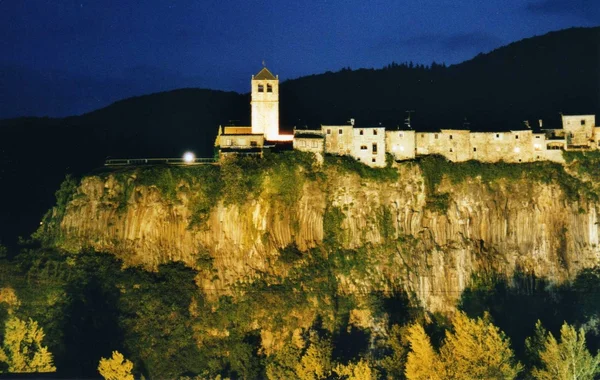
Volcanic Garrotxa: Olot and Santa Pau
Catalonia
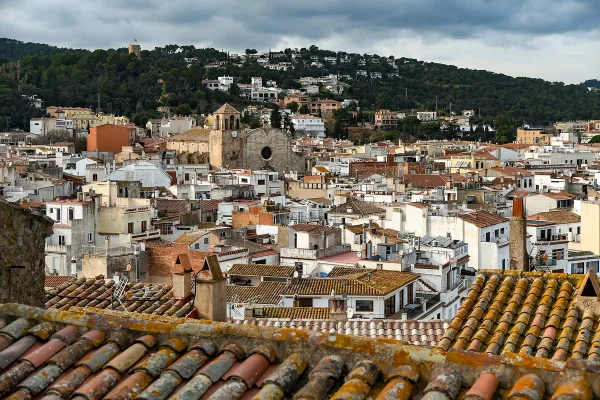
Costa Brava: Tossa, Sant Feliu and Begur
Catalonia
Vall de Núria, Toses and Ribes de Freser
Catalonia
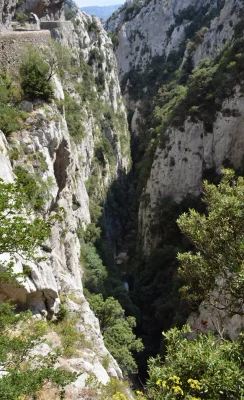
Gorges de Galamus and Pays Cathare hinterland
Languedoc and Cathar Country