Inland Algarve by motorcycle: Silves and the Barrocal of Alte, Salir and Querença
Best Season
IPMA normals for Faro (1981-2010): in January, an average high of 16.1 °C and an average low of 7.9 °C; the 1991-2020 normal gives about 49 mm of rain that month. Inland, mornings are colder than on the coast. Almond blossom runs from late January into February, depending on the year.
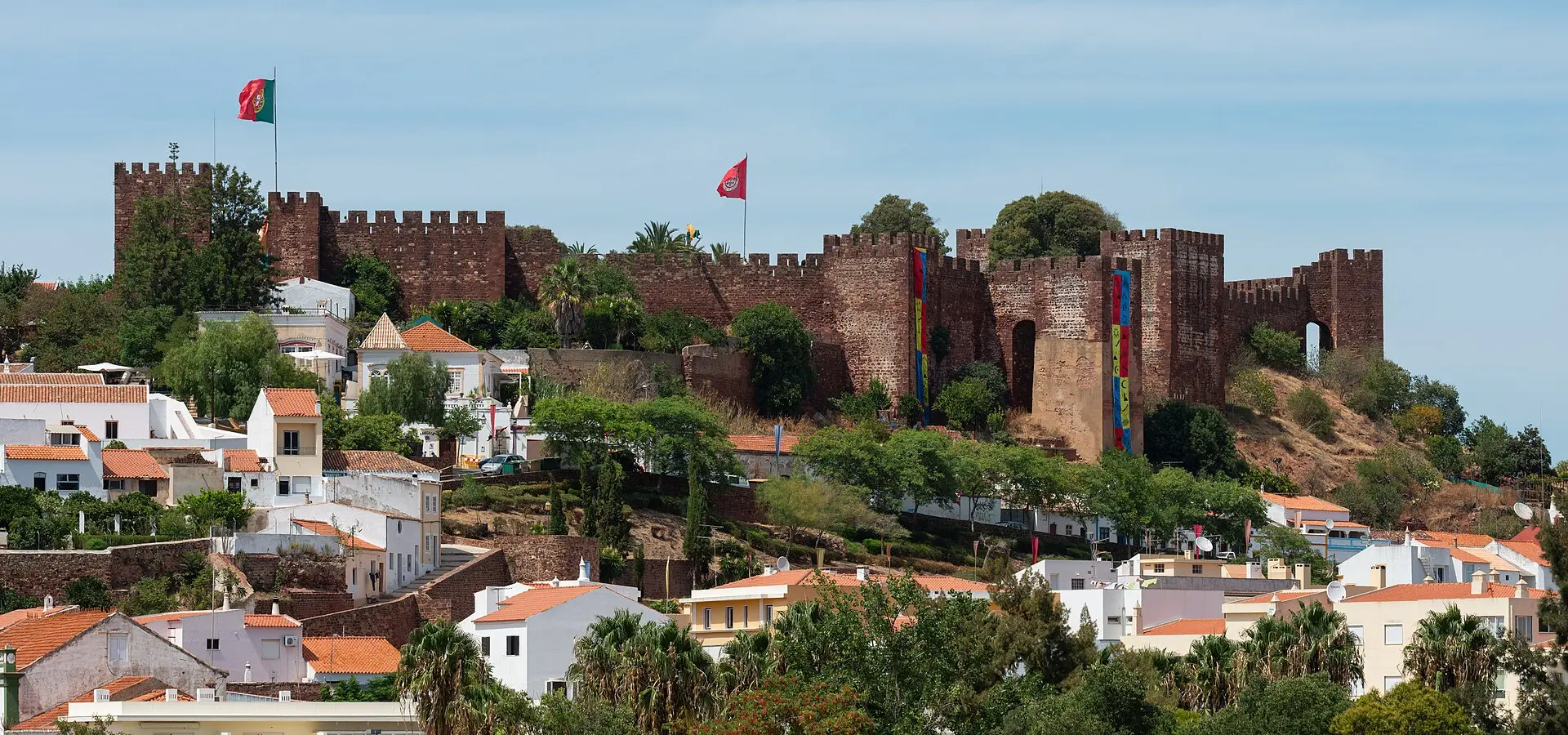
The Algarve away from the sea, from Portimão to Loulé: the red-stone castle of Silves, the N124 across the Barrocal and the villages of Messines, Alte, Salir and Querença, with almond blossom in late winter.
Published on
Highlights
- 1Silves Castle, the largest fortification in the Algarve
- 2The N124 across the Barrocal, among almond trees
- 3The springs of Alte
- 4Salir and Querença, in the Algarvensis Geopark
About this route
This is the Algarve that never makes it onto the coastal postcards. The route sets off from Portimão, follows the Arade valley up to Silves and heads east on the N124, halfway between the coast and the hills: the Barrocal, a limestone belt of almond, carob and orange trees. In late January and February, the almond blossom turns it white and pink.
Silves was the chief city of the Islamic Algarve, and its red sandstone castle is, according to Turismo de Portugal, the largest fortification in the region; it has been a national monument since 1910. São Bartolomeu de Messines, further east, is the birthplace of the poet João de Deus, author of the Cartilha Maternal, and his house museum stands next to the parish church.
Alte is built around its two springs, the Fonte Pequena and the Fonte Grande, and honours in azulejos the poet Cândido Guerreiro, born there in 1871. Salir keeps, on a limestone hill, the remains of a rammed-earth castle in the Almohad tradition. Alte, Salir and Querença all belong to the municipality of Loulé and lie within the Algarvensis Geopark. The route ends in Loulé via the N396.
Why it does not go through Monchique: the EN266, the road from Portimão to Monchique, was cut in several places by the storms of February 2026 (Monchique council listed km 43.7, 46.7 and 47.2 as closed in the Portimão direction), and we have found no official confirmation that it has fully reopened. Once Infraestruturas de Portugal or the council declare it open, the Serra de Monchique will be the natural extension of this route.
Route stops
Silves and its castle
Monument
Red sandstone castle, a national monument since 1910 and the largest fortification in the Algarve.
São Bartolomeu de Messines
Village
Birthplace of the poet João de Deus; house museum next to the parish church.
Alte
Village
Village of Loulé with two springs, the Pequena and the Grande, and memories of the poet Cândido Guerreiro.
Salir
Village
Remains of a rammed-earth castle in the Almohad tradition on a limestone hill.
Querença
Village
Inland village of Loulé, within the Algarvensis Geopark.
Practical information
Weather
IPMA normals for Faro (1981-2010): in January, an average high of 16.1 °C and an average low of 7.9 °C; the 1991-2020 normal gives about 49 mm of rain that month. Inland, mornings are colder than on the coast. Almond blossom runs from late January into February, depending on the year.
Traffic
The N124 and N396 are national roads with little traffic outside the towns. Do not take the EN266 towards Monchique without first checking its status with Infraestruturas de Portugal or Monchique council (landslide closures since February 2026).
Fuel stops
It is about 82 km between Portimão and Loulé, two towns with every service: no fuel planning needed.
Where to stay on this route
The towns this route passes through — useful for splitting it into stages or sleeping near the start. Book ahead in high season.
- Silves and its castleSee places to stay
- São Bartolomeu de MessinesSee places to stay
- AlteSee places to stay
Affiliate links: if you book through them, Nomadiq earns a small commission at no extra cost to you.


