Vicentina Coast: Wild Alentejo
Best Season
Atlantic: frequent wind. Sunny most of the year. Best March-November.
The Alentejo Vicentina Coast: dark cliffs, virgin beaches, storks on cliffs and Portugal's most authentic fishing villages. The coast nobody knows.
Highlights
- 1Costa Vicentina: 110 km of unspoilt coastline
- 2Storks nesting on sea cliffs (unique in Europe)
- 3Zambujeira do Mar: village and music festival
- 4Fresh percebes (goose barnacles) right on the beach
About this route
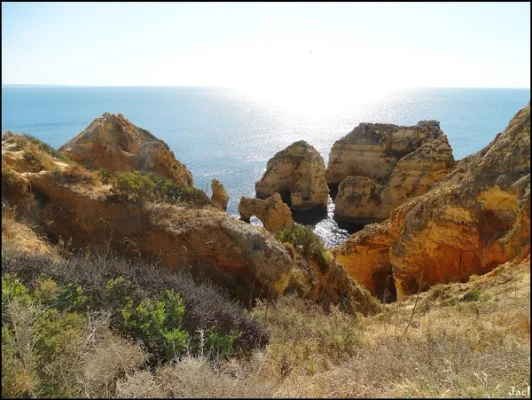
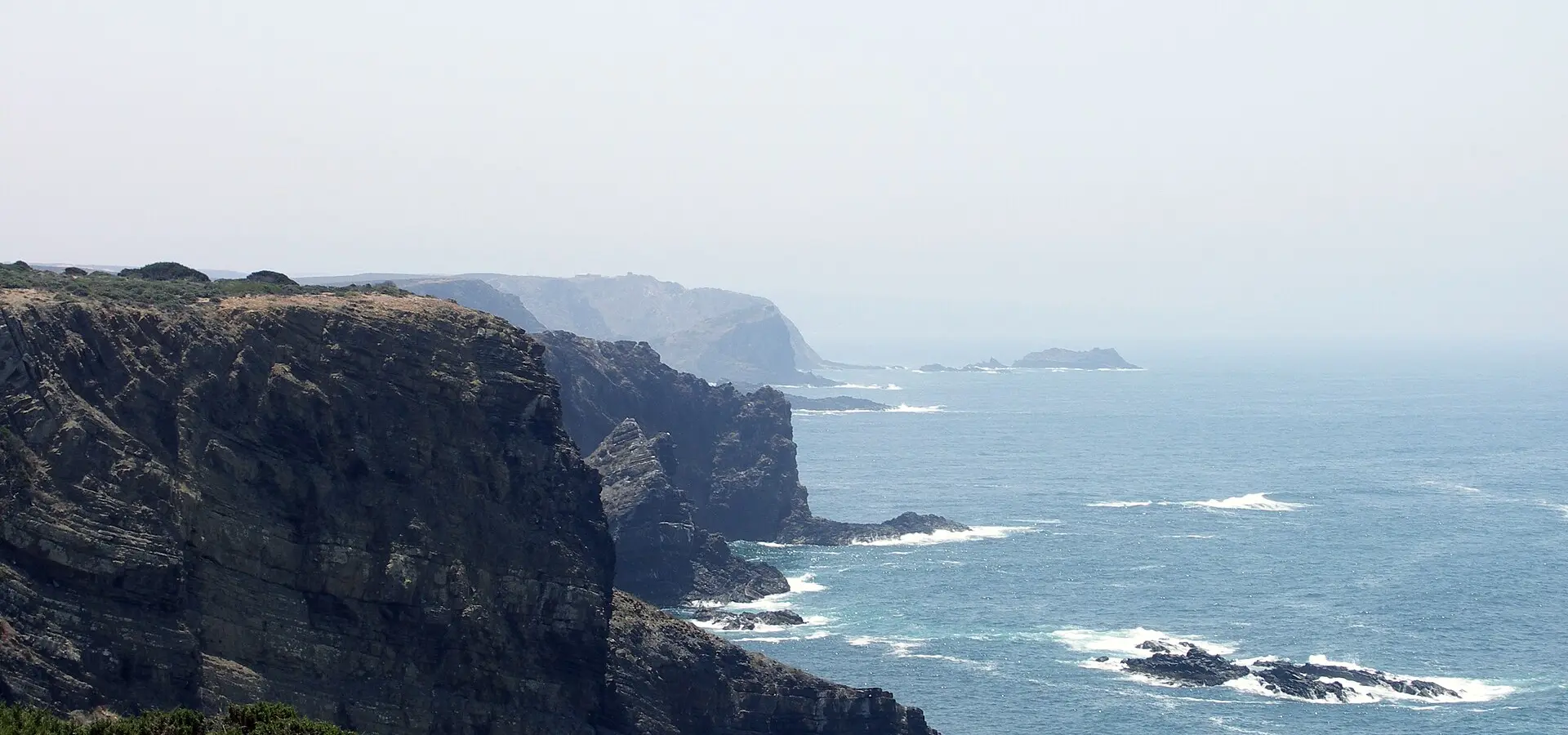
The Alentejo's Costa Vicentina is the other face of the Portuguese coast: while the Algarve fills up with tourists and resorts, this strip of shoreline between Porto Covo and Odeceixe remains wild, untouched and virtually undeveloped. It is one of the last stretches of European Atlantic coast where nature rules: black schist cliffs plunging vertically into the ocean, beaches accessible only on foot along trails through scrubland, white storks nesting on the coastal crags (a phenomenon unique in Europe — storks normally nest on bell towers and trees, not on sea cliffs), and an Atlantic light that painters and photographers chase obsessively.
The Parque Natural do Sudoeste Alentejano e Costa Vicentina protects over 110 km of coastline under some of the strictest building regulations in all of Europe: it is literally forbidden to build within 1 km of the sea, which has saved this coast from tourist destruction. For the rider, this means empty coastal roads, intact fishing villages like Zambujeira do Mar or Almograve, and the constant feeling of being in a forgotten corner of the world.
Zambujeira do Mar is probably the most charming village on the Costa Vicentina: barely 800 inhabitants, whitewashed houses, a spectacular cliff dropping to the sea, a huge beach reached by stairs carved into the rock, and every August the Festival Sudoeste, one of Portugal's most important music festivals drawing over 40,000 people to a farm by the sea.
The coastal Alentejo's gastronomy is a fascinating blend of sea and land: fresh percebes (goose barnacles) harvested that very morning, caldeirada alentejana (fish stew with bread), ensopado de borrego (lamb stew with bread-soaked gravy), migas de espargos (breadcrumbs with wild asparagus) and the ever-present Alentejo wines, some of the best reds in Portugal.
Practical rider info: the N120 and local roads along the coast are quiet, well surfaced and carry very little traffic. The Atlantic wind can be strong, especially in winter. The area is accessible year-round but best from March to November. For accommodation, the rural houses of Zambujeira do Mar are affordable and authentic. For eating, in Vila Nova de Milfontes the Restaurante Tasca do Celso serves fresh seafood and caldeirada like nowhere else.
Route stops
Vila Nova de Milfontes
Village
Coastal town with castle and beach.
Zambujeira do Mar
Village
White village atop cliffs.
Practical information
Weather
Atlantic: frequent wind. Sunny most of the year. Best March-November.
Traffic
Very low traffic. Quiet roads.
Fuel stops
Petrol stations in Sines and Vila Nova de Milfontes.
Where to stay on this route
The towns this route passes through — useful for splitting it into stages or sleeping near the start. Book ahead in high season.
- Vila Nova de MilfontesSee places to stay
- Zambujeira do MarSee places to stay
- SinesSee places to stay
Affiliate links: if you book through them, Nomadiq earns a small commission at no extra cost to you.