Turquoise Coast: Tipasa, Cherchell and Ténès
Best Season
Temperate Mediterranean. Hot in summer. Best in spring and autumn.
The most beautiful coastline in all of North Africa: Tipasa (Roman ruins on the Mediterranean), Cherchell (capital of the kingdom of Juba II) and the unspoilt coves of the Algerian "Turquoise Coast".
Highlights
- 1Tipasa (UNESCO): Roman ruins overlooking the Mediterranean
- 2Cherchell: the capital of King Juba II
- 3Turquoise Coast: unspoilt coves untouched by tourism
- 4The N11 coastal road: 200 km of winding roads overlooking the sea
About this route
The Algerian coastline between Algiers and Ténès is probably the least well-known and most unspoilt stretch of Mediterranean coastline in the entire northern Mediterranean. Whilst the Spanish, French, Italian, Greek and Turkish coasts have been developed and overcrowded for decades, the Algerian coast has remained virtually untouched: undeveloped turquoise coves, red rock cliffs plunging into the sea, fishing villages that function exactly as they did a hundred years ago, and the absolute certainty that there isn’t another tourist for kilometres around. The Algerians call this stretch the ‘Turquoise Coast’ (Côte Turquoise) because of the intense colour of its waters.
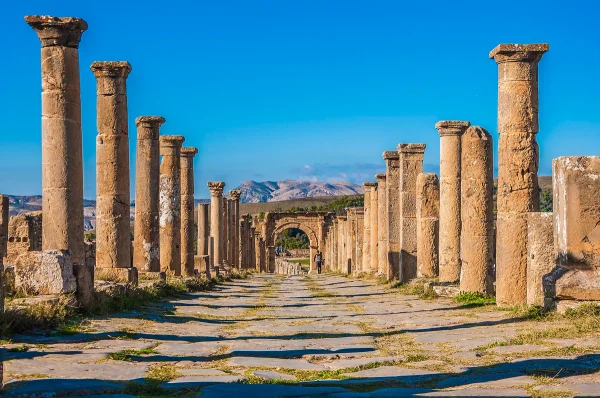
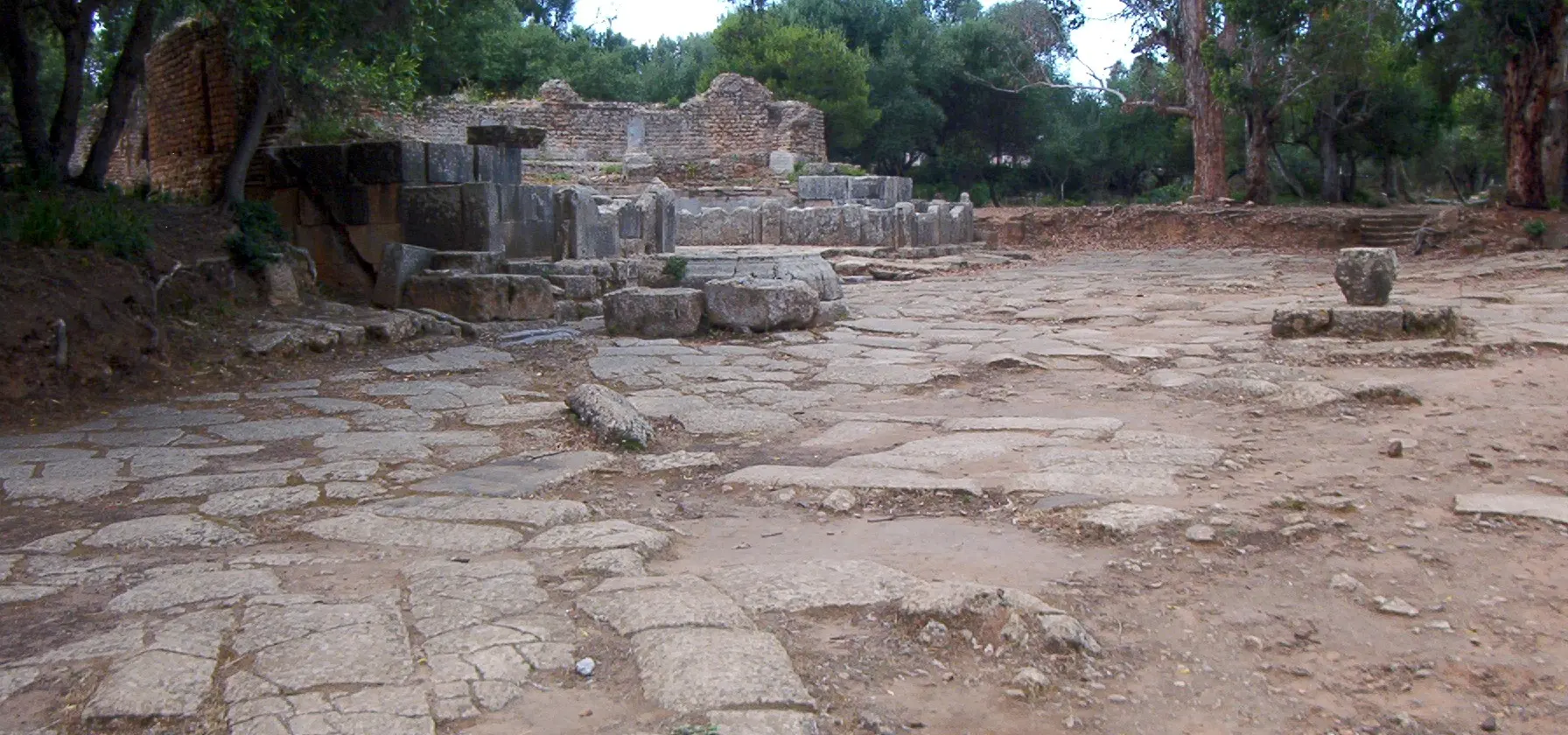
Tipasa is the first stop and probably the most romantic archaeological site in the whole of the Mediterranean. It is a 1st-century AD Roman city, designated a UNESCO World Heritage Site, whose ruins — the basilica, forum, thermal baths, amphitheatre and necropolis — are perched directly on the cliffs that plunge into the blue sea. Albert Camus, who spent part of his youth in Algeria here, wrote in *Weddings* that ‘happiness and legend dwell in Tipasa’ and that ‘spring in Tipasa is a spectacle known only to the gods’. Walking amongst the ruins with the Mediterranean in the background is an experience that is hard to beat.
Cherchell, 30 km to the west, was in ancient times the capital of the Kingdom of Mauretania under King Juba II (25 BC – 23 AD), one of the most learned monarchs of the ancient world. Juba II was the son of the King of Numidia; he was educated in Rome by Augustus and married Cleopatra Selene, daughter of Cleopatra and Mark Antony. He transformed Cherchell (then known as Caesarea) into one of the most refined cities in the Mediterranean, with a museum that rivalled those of Rome. Today, the Cherchell Museum houses an exceptional collection of Roman statuary, and the remains of the Roman harbour are visible beneath the crystal-clear water.
The N11 coastal road between Tipasa and Ténès is the area’s main motorcycling route: over 200 km of constant bends overlooking the sea, with reddish-coloured cliffs, turquoise coves accessible via side tracks, fishing villages where multicoloured boats rest on the sand, and absolute solitude. The sensation of riding along an unspoilt Mediterranean coastline – free of hotels, tourists and advertising hoardings – is an experience that almost no other coastline in the world can offer in the 21st century.
Motorcycling tips: The N11 is generally in good condition, with some sections under construction. Petrol stations are frequent. People in the coastal villages are very hospitable and curious about foreign motorcyclists. For accommodation in Tipasa, the Hôtel Tipasa Village has a terrace overlooking the ruins and the sea. For food: the poisson grillé (grilled fish) at any beach bar along the coast is spectacularly good and cheap (€3–5). And a tip: bring your snorkelling gear. The water in the coves along the Turquoise Coast is so crystal-clear and teeming with marine life that taking a dip for a few minutes is practically a must.
Route stops
Tipasa
Monument
Roman ruins UNESCO over the sea.
Cherchell
Monument
Capital of Juba II with an exceptional museum.
Ténès
Village
Fishing port with a 10th century mosque.
Practical information
Weather
Temperate Mediterranean. Hot in summer. Best in spring and autumn.
Traffic
Low traffic on the coast. Algiers with heavy traffic.
Fuel stops
Frequent petrol stations.
Where to stay on this route
The towns this route passes through — useful for splitting it into stages or sleeping near the start. Book ahead in high season.
- TipasaSee places to stay
- CherchellSee places to stay
- TénèsSee places to stay
Affiliate links: if you book through them, Nomadiq earns a small commission at no extra cost to you.