Djemila and the Roman ruins of Kabylia
Best Season
Mediterranean on the coast. Cold in the mountains in winter. Better in spring and autumn.
Djemila (UNESCO), the most beautiful Roman city in all of North Africa, and a tour of Algeria's Kabylia: Berber mountains, hilltop villages and empty roads through a country without tourism.
Highlights
- 1Djemila (UNESCO): Africa’s most beautiful Roman city
- 2Kabylia: Berber mountains and Amazigh culture
- 3Bejaia: a spectacular bay and Cap Carbon
- 4Algeria without tourists: empty roads and authenticity
About this route
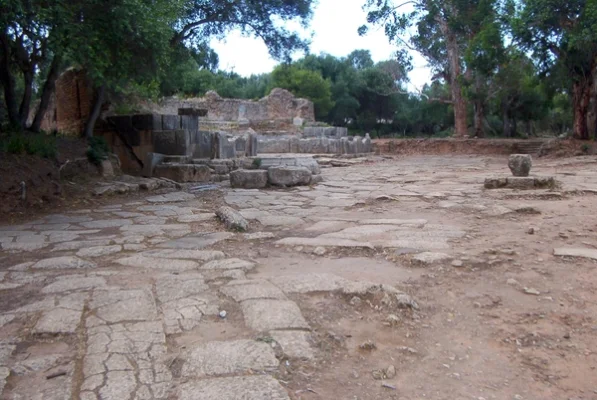
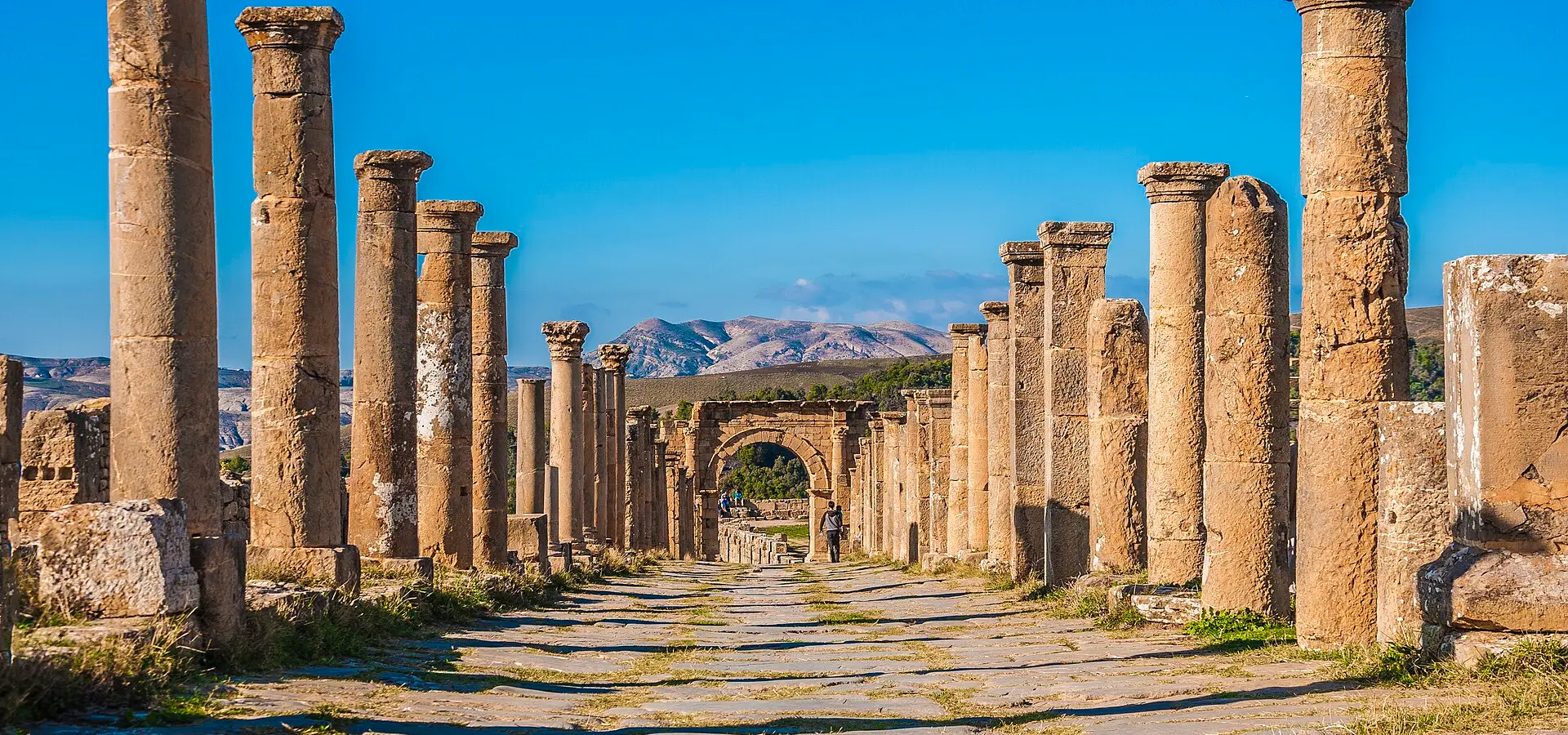
Djemila is probably the most beautiful and best-preserved Roman city on the entire African continent, and one of the most important archaeological sites in the Mediterranean. Designated a UNESCO World Heritage Site in 1982, it occupies a spectacular location: a mountain ridge at an altitude of 900 metres in the heart of Kabylia, with ruins stretching for a kilometre along a hilltop surrounded by ravines. Its Roman name was Cuicul, and it was founded in the 1st century AD as a colony for military veterans by Emperor Nerva. What remains is an extraordinarily complete Roman urban complex: a forum, a basilica, temples, triumphal arches, thermal baths, a theatre and, above all, a museum housing mosaics of a quality comparable to those at Pompeii.
Kabylia, the mountainous region where Djemila is situated, is the most culturally distinctive area in the whole of Algeria. It is the historic stronghold of the Kabyle Berbers, an Amazigh people who have preserved their language (Tamazight), their customs and their traditional architecture for centuries, resisting the Arabisation that prevailed in the rest of the Maghreb. The Kabyle villages, perched on mountain ridges with stone houses and red-tiled roofs, are strikingly reminiscent of the villages of Morocco’s Rif region or the Alpujarras in Granada. The people are extraordinarily hospitable towards foreigners.
Riding a motorbike through Kabylia is an experience quite unlike any other destination in North Africa. There’s no tourism — Algeria receives barely 2 million tourists a year, ten times fewer than Morocco — the roads are empty, the scenery is spectacular (mountains covered in holm oaks and cedars, deep valleys, villages perched on the slopes) and you constantly feel as though you’re exploring unspoilt territory. Algeria’s national roads are generally in good condition (Algeria has invested heavily in infrastructure over the last two decades), and petrol is ridiculously cheap (less than €0.30 per litre).
Tizi Ouzou, the capital of Greater Kabylia, and Béjaïa, the port city marking the end of the coastal route, are urban surprises that travellers do not expect. Béjaïa, in particular, boasts a spectacular Mediterranean bay (the French colonists called it ‘Bougie la Belle’), the remains of a 13th-century Hafsid citadel, and a headland (Cap Carbon) featuring the tallest lighthouse in the entire Mediterranean.
Motorcycling tips: Algeria requires a visa for Spanish nationals (this can be obtained from the consulate and takes 2–3 weeks). The most convenient ferry routes are Alicante–Oran (Baleària, 12 hours) or Barcelona–Algiers (Algérie Ferries, 18 hours). To bring your vehicle into the country, you’ll need Algerian insurance and a temporary road permit, which can be obtained at the port. Driving is aggressive in cities but relaxed in the countryside. For accommodation in Kabylia, the small family-run hotels are cheap and clean (€15–25 per night). For food: Kabyle couscous (with pulses and lamb) is one of the best dishes in the Maghreb.
Route stops
Tizi Ouzou
Village
Capital of Greater Berber Kabylia.
Djemila
Monument
UNESCO Roman city.
Béjaïa
Village
Spectacular bay and Cap Carbon.
Practical information
Weather
Mediterranean on the coast. Cold in the mountains in winter. Better in spring and autumn.
Traffic
Aggressive traffic in cities. Vacuum in the interior.
Fuel stops
Very frequent petrol stations. Petrol at €0.30/litre.
Where to stay on this route
The towns this route passes through — useful for splitting it into stages or sleeping near the start. Book ahead in high season.
- Tizi OuzouSee places to stay
- DjemilaSee places to stay
- BéjaïaSee places to stay
Affiliate links: if you book through them, Nomadiq earns a small commission at no extra cost to you.