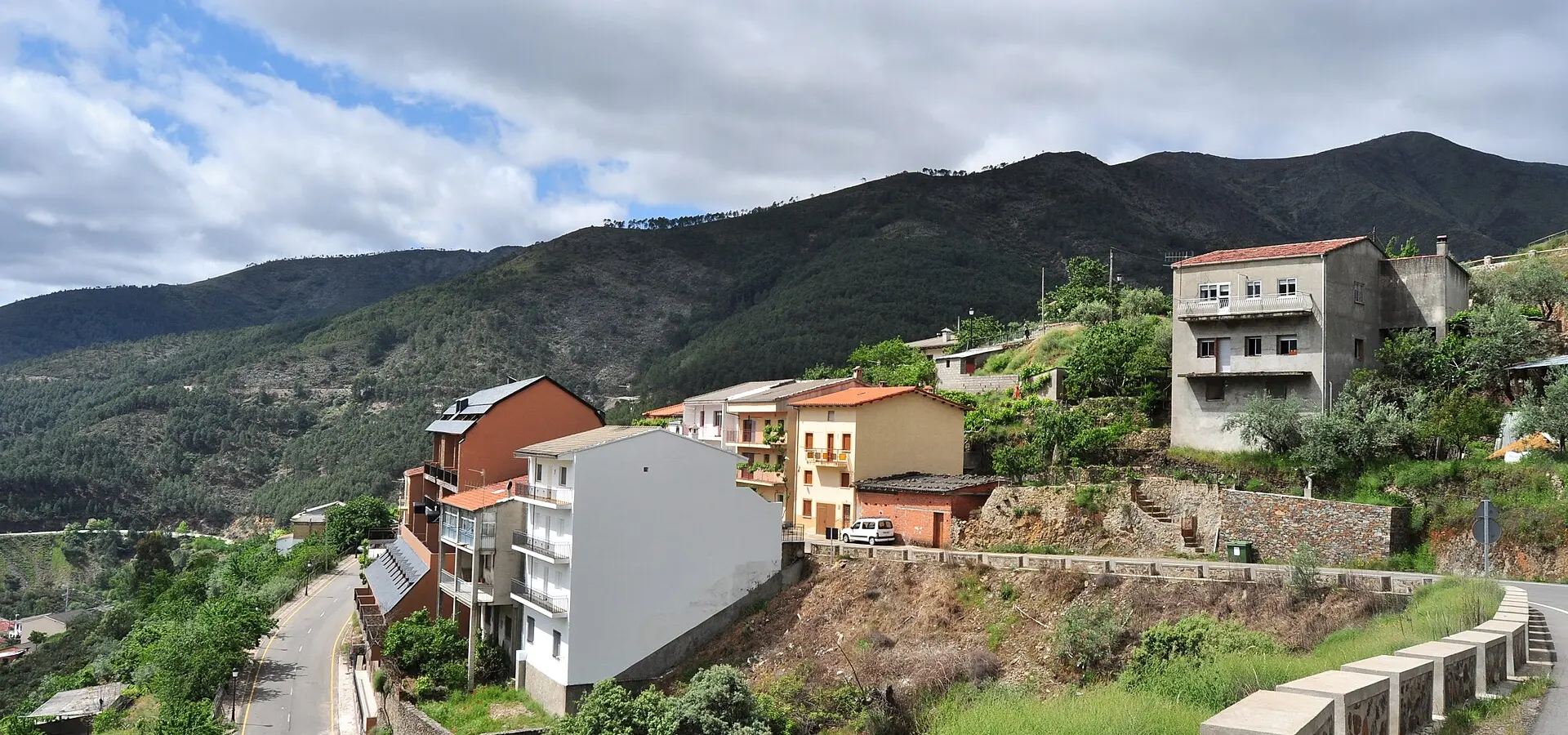
Las Hurdes and Sierra de Gata: Spain's Most Remote Corner
Best Season
Cold winters with possible snow. Hot summer but cool at natural pools. Best spring and autumn.
Las Hurdes, the region Buñuel immortalized in "Land Without Bread" (1933) as forgotten Spain, and Sierra de Gata with its stone villages and Portuguese border. Mainland Spain's most remote route.
Highlights
- 1Las Hurdes: Buñuel's Spain, the most remote corner of the peninsula
- 2Sierra de Gata: "a fala", a living medieval Romance language
- 3Castillo de Trevejo: views stretching to Portugal
- 4Crystal-clear natural pools in mountain rivers
About this route
Las Hurdes is the most remote and least visited comarca in all of peninsular Spain. Tucked into the north of Cáceres province, between the Sierra de Francia (Salamanca) and the Sierra de Gata, it is a labyrinth of narrow, deep valleys carved by rivers that form crystal-clear natural pools, with slate villages clinging to the hillsides that for centuries were almost completely cut off from the rest of the country. Luis Buñuel filmed his documentary "Tierra sin Pan" (Land Without Bread) here in 1933, one of the most powerful films in Spanish cinema, which portrayed extreme poverty in a region that seemed to belong to another century.
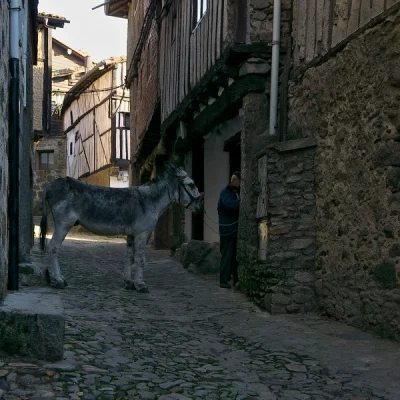
The roads of Las Hurdes are both a challenge and a delight for the experienced rider. The CC-156, climbing from Pinofranqueado to Las Mestas through the valley of the Río Hurdano, is narrow, technical, with extremely tight bends and no guardrails on many stretches — but the scenery is superb: slate hillsides blanketed with centuries-old chestnut trees, the river glinting at the bottom of the gorge, and an absolute solitude that feels almost mystical. The Hurdano villages — El Gasco, Martilandrán, Riomalo de Abajo — are tiny hamlets of 10 to 30 inhabitants where time seems to have stood still.
The Sierra de Gata, west of Las Hurdes, is another forgotten comarca with extraordinary heritage. Its villages — San Martín de Trevejo, Trevejo, Robledillo de Gata — preserve stone-and-timber architecture classified as a Bien de Interés Cultural. In San Martín de Trevejo, people still speak "a fala", a medieval Romance language related to Galician-Portuguese that survives in only three villages of this sierra. The road that climbs to the Castillo de Trevejo, perched on a granite crag with views into Portugal, is one of the most spectacular in all of Extremadura.
The natural pools of Las Hurdes and the Sierra de Gata are one of the great secrets of the Spanish summer. The Río Los Ángeles at Las Mestas, the Charco de la Olla at Caminomorisco, and the gorges of the Sierra de Gata form natural swimming holes of cold, transparent water surrounded by oak and chestnut forests — the perfect counterpoint to the Extremaduran heat. In June, the wild cherries of Las Hurdes (smaller but more intense than those from the Jerte Valley) are sold in the villages at ridiculously low prices.
Riding tips: the roads of Las Hurdes are technical and require experience (narrow stretches, irregular asphalt, free-roaming livestock). Mobile coverage is very limited in the valleys. Petrol stations in Pinofranqueado and Caminomorisco. For accommodation, the rural houses of Las Mestas or Riomalo de Abajo offer simple but authentic lodging. For dining, roast Hurdano kid goat cooked over holm-oak firewood and Las Hurdes honey (famous throughout Spain) are the star products.
Route stops
Las Mestas
Village
End of the Hurdes road, natural pools in the Los Ángeles river.
El Gasco
Village
Slate Hurdes hamlet with spectacular waterfall.
Castillo de Trevejo
Monument
Templar castle on granite outcrop with views of Portugal.
San Martín de Trevejo
Village
Village where "a fala", a medieval Romance language, is spoken.
Practical information
Weather
Cold winters with possible snow. Hot summer but cool at natural pools. Best spring and autumn.
Traffic
Virtually no traffic. Loose animals on the road.
Fuel stops
Petrol station in Pinofranqueado and Caminomorisco. Fill up before entering Las Hurdes.
Where to stay on this route
The towns this route passes through — useful for splitting it into stages or sleeping near the start. Book ahead in high season.
- Las MestasSee places to stay
- El GascoSee places to stay
- Castillo de TrevejoSee places to stay
Affiliate links: if you book through them, Nomadiq earns a small commission at no extra cost to you.
Related routes
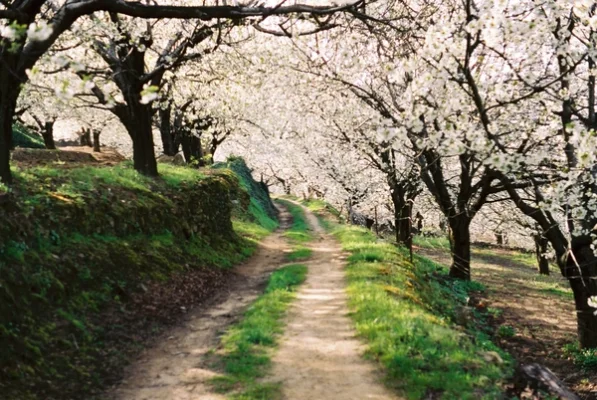
Jerte Valley and La Vera: Cherry Blossoms and Yuste Monastery
Extremadura
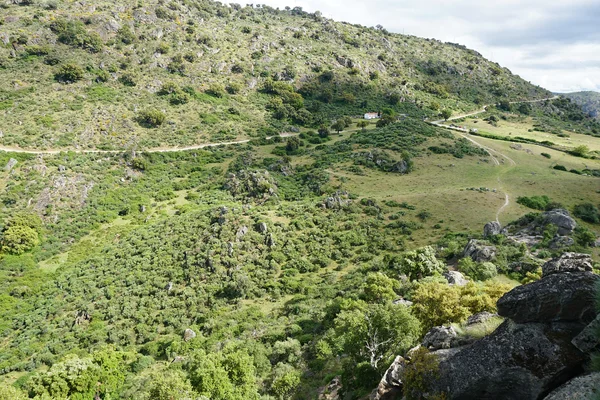
Arribes del Duero
Castile and Leon
Monfragüe, Trujillo and Cáceres: Vultures, Conquistadors and UNESCO
Extremadura
Sierra de Francia and La Alberca
Castile and Leon