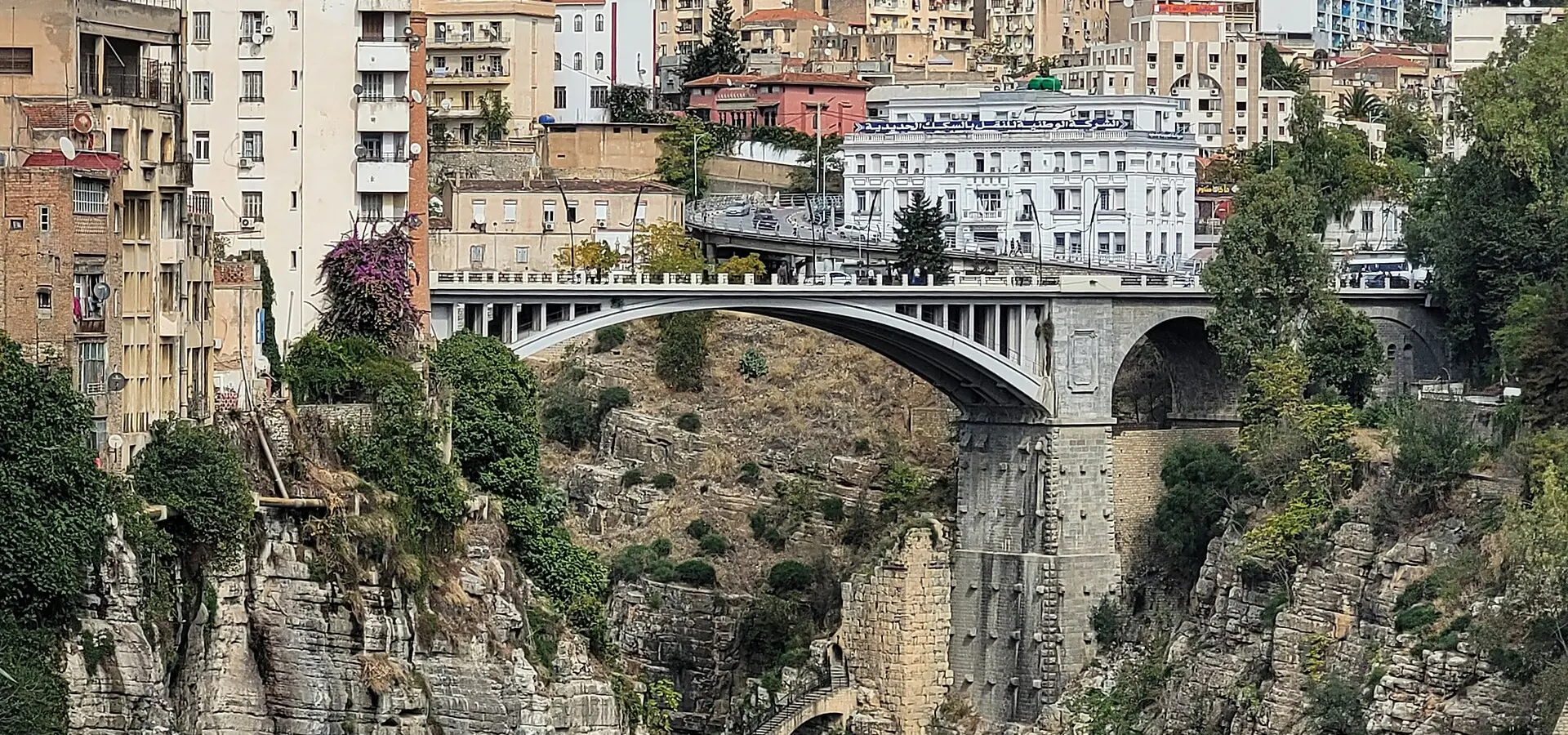
Gorges of Tighanimine and Constantine
Best Season
Cold winters inland. Hot summer. Spring and autumn best.
Constantine, the "city of bridges" hanging over 200-metre gorges, and the spectacular Gorges de Tighanimine: the Algeria that nobody knows, with empty roads and impossible landscapes.
Highlights
- 1Constantine: ‘the city of bridges’ spanning 200-metre gorges
- 2Tighanimine Gorges: canyons without tourists
- 3Timgad (UNESCO): a Roman city with a perfect layout
- 4Aurès: the Berber mountains of eastern Algeria
About this route
Constantine is one of the most extraordinary and least well-known cities in the whole of the Mediterranean. Perched on a vertical cliff face over 200 metres high, cut through by the River Rhumel which has carved spectacular gorges on either side, it is a city that can only be described as ‘hanging over the abyss’. Its famous bridges — the Pont Sidi M’Cid (175 metres above the abyss), the Pont Sidi Rached (a 27-arch stone viaduct), and the Mellah Slimane suspension footbridge—are examples of French colonial engineering that still impress today with their audacity. In ancient times, Constantine was one of the most important cities in Numidia (the pre-Roman Berber kingdom) and its strategic position above the gorges made it virtually impregnable.
The Tighanimine Gorges, south of Constantine on the road to Batna, are one of the most spectacular and least visited geological landscapes in the whole of Algeria. They consist of a system of deep canyons carved out by the River Tighanimine in the limestone of the Eastern Atlas, with vertical walls over 300 metres high, lush vegetation at the bottom (oleanders, palm trees, fig trees) and a road that winds along the edge of the abyss with challenging bends and dizzying views. It is the Algerian equivalent of the French Gorges du Verdon, but without a single tourist.
Timgad, some 100 km south of Constantine, is the route’s other archaeological gem: another complete Roman city, designated a UNESCO World Heritage Site, built by Emperor Trajan in AD 100 as a settlement for veterans. Unlike Djemila, which is built into the mountainous terrain, Timgad was laid out in a perfect grid pattern (like an enlarged Roman military camp) and its triumphal arch, theatre, forum, library and cobbled streets remain intact. It is the Roman city with the most regular layout in the whole of North Africa.
The road between Constantine and Timgad crosses the most mountainous region of eastern Algeria: the Aurès Mountains, the historic homeland of the Chaoui Berbers, who resisted both the Romans and the French for centuries. During the Algerian War of Independence (1954–1962), the Aurès were one of the main centres of resistance for the FLN, and even today the echoes of that war can still be felt in the monuments, the street names and the collective memory of the people.
Motorcycling tips: the Algerian national roads between Constantine and Batna/Timgad are in good condition. Petrol stations are frequent and cheap. The locals are curious and friendly towards foreign motorcyclists (who are a rare sight). For accommodation in Constantine, the Marriott Hotel offers views of the gorges from your room. For food: rechta constantinoise (homemade pasta with meat sauce) is the city’s signature dish. And a tip: visiting Constantine at sunset, when the golden light bathes the gorges and the bridges are lit up, is one of the most powerful urban experiences in the whole of the Mediterranean.
Route stops
Pont Sidi M'Cid
Viewpoint
Bridge 175 m above the gorge.
Gorges de Tighanimine
Viewpoint
Spectacular canyons without tourists.
Timgad
Monument
UNESCO Roman city with a perfect plan.
Practical information
Weather
Cold winters inland. Hot summer. Spring and autumn best.
Traffic
Constantine: heavy traffic. Inland: empty roads.
Fuel stops
Frequent and cheap petrol stations.
Where to stay on this route
The towns this route passes through — useful for splitting it into stages or sleeping near the start. Book ahead in high season.
- TimgadSee places to stay
- ConstantineSee places to stay
Affiliate links: if you book through them, Nomadiq earns a small commission at no extra cost to you.