Canal du Midi: Toulouse to Béziers
Best Season
Mediterranean. Accessible all year round. Warm in summer.
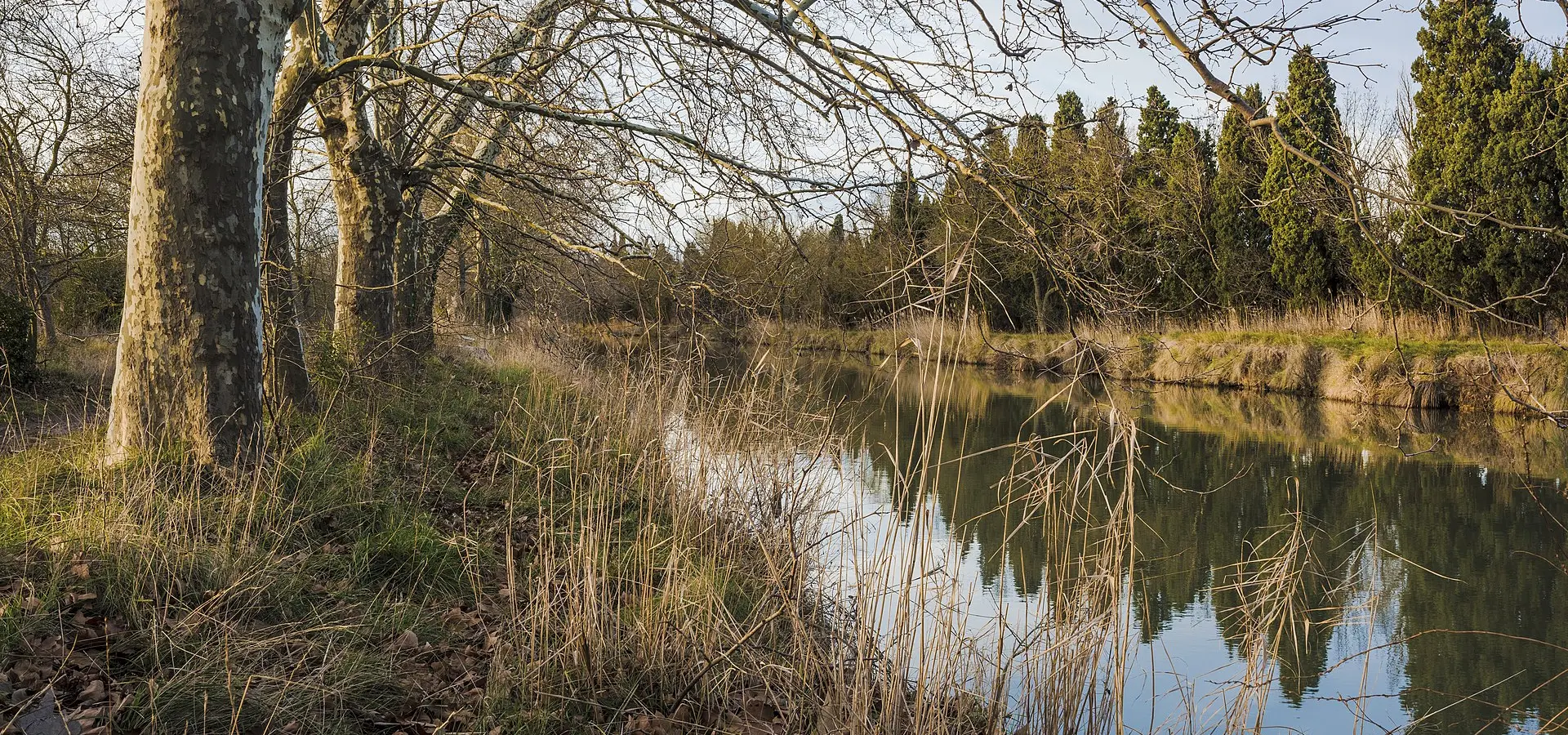
The Canal du Midi (UNESCO heritage site), a masterpiece of 17th century engineering, with its centuries-old plane trees, historic locks and red-brick villages. The most relaxed route in the South of France.
Highlights
- 1Canal du Midi (UNESCO): 17th-century engineering masterpiece
- 2Fonsérannes Locks: staircase of 8 locks
- 3Castelnaudary: capital of cassoulet
- 4Toulouse "Ville Rose" and Basilica of Saint-Sernin
About this route
The Canal du Midi is one of the most extraordinary feats of engineering in all of European history. Built between 1666 and 1681 by Pierre-Paul Riquet on commission from Louis XIV, it links Toulouse to the Mediterranean over 240 km, crossing hills, valleys, and garrigues by means of a system of 91 locks, numerous aqueducts, and the Malpas Tunnel (the first navigable tunnel in history, excavated in 1679). It was inscribed as a UNESCO World Heritage Site in 1996 and is arguably the most elegant hydraulic infrastructure ever built: its banks are lined with 42,000 centuries-old plane trees that form a continuous green cathedral along the entire route.
The motorcycle route does not literally follow the canal (the towpath is reserved for cyclists and pedestrians) but rather the parallel departmental roads that flank it. The D6113 and associated country roads wind between the canal and the villages of the Lauragais, traversing a landscape of gentle hills covered in wheat, sunflowers (spectacular in July), and Minervois vineyards. This is a completely flat route with not a single pass or tricky bend — perfect for a relaxed day's ride where the goal is not spirited riding but rather the scenery and the cultural stops.
Essential stops include Castelnaudary (the capital of cassoulet, the bean-and-confit-de-canard stew that is the emblematic dish of the Languedoc), the Écluses de Fonsérannes in Béziers (a staircase of eight consecutive locks that overcomes a 21-metre drop — one of the canal's most impressive engineering feats), and the Malpas Tunnel (which Riquet excavated in secret when Louis XIV threatened to cancel the project over cost overruns). In Castelnaudary, cassoulet is served in clay pots slow-cooked for hours: it is one of the most hearty dishes in all of French gastronomy.
Toulouse, the starting point of the route, deserves at least half a day. Known as the "Ville Rose" (Pink City) for its red-brick architecture, it is home to the Basilica of Saint-Sernin (the largest Romanesque church in all of France), the Capitole (a Renaissance city hall with a 128-metre facade), and the two waterways — the Garonne and the Canal du Midi — that define its urban identity. Béziers, at the route's end, is also well worth a visit: its Gothic cathedral, perched on a sheer cliff, commands the entire Orb valley.
Practical tips for riders: the route is completely flat and accessible year-round. Summer is hot (35 C is typical) but the plane trees along the canal provide shade. Fuel up in Toulouse, Castelnaudary, Carcassonne (a 10 km detour), or Béziers. For cassoulet in Castelnaudary, the Hôtel Fourcade is the classic reference, but any restaurant in the centre serves authentic versions for 15-20 euros. A useful tip: this route works perfectly in reverse (Béziers to Toulouse) if you are coming from the Mediterranean coast, because the landscape gradually opens up from the Hérault plain into the rolling hills of the Lauragais.
Route stops
Castelnaudary
Village
Capital of the cassoulet, canal locks.
Carcassonne (desvío)
Monument
UNESCO medieval citadel 10 km from the canal.
Esclusas de Fonsérannes
Monument
Staircase with 8 locks (21 m drop).
Béziers
Village
Gothic cathedral overlooking the Orb valley.
Practical information
Weather
Mediterranean. Accessible all year round. Warm in summer.
Traffic
Low traffic on regional roads. Toulouse with urban traffic.
Fuel stops
Frequent petrol stations along the route.
Where to stay on this route
The towns this route passes through — useful for splitting it into stages or sleeping near the start. Book ahead in high season.
- CastelnaudarySee places to stay
- Carcassonne (desvío)See places to stay
- Esclusas de FonsérannesSee places to stay
Affiliate links: if you book through them, Nomadiq earns a small commission at no extra cost to you.
Related routes
Gers: bastides, armagnac and sunflowers
Dordogne and the Southwest
Foix, Montségur and the Cathar castles of Ariège
French Pyrenees
Carcassonne and Corbières
Languedoc and Cathar Country
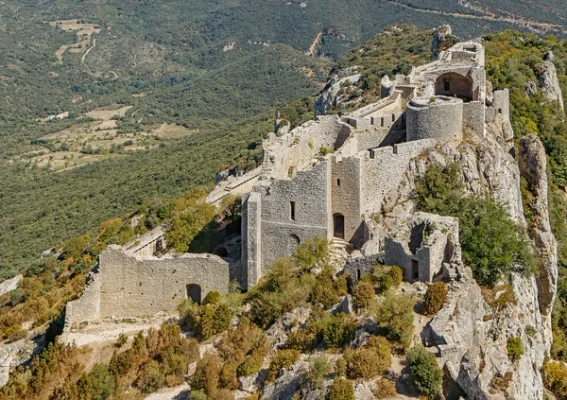
Châteaux Cathares: Peyrepertuse, Quéribus and Puilaurens
Languedoc and Cathar Country