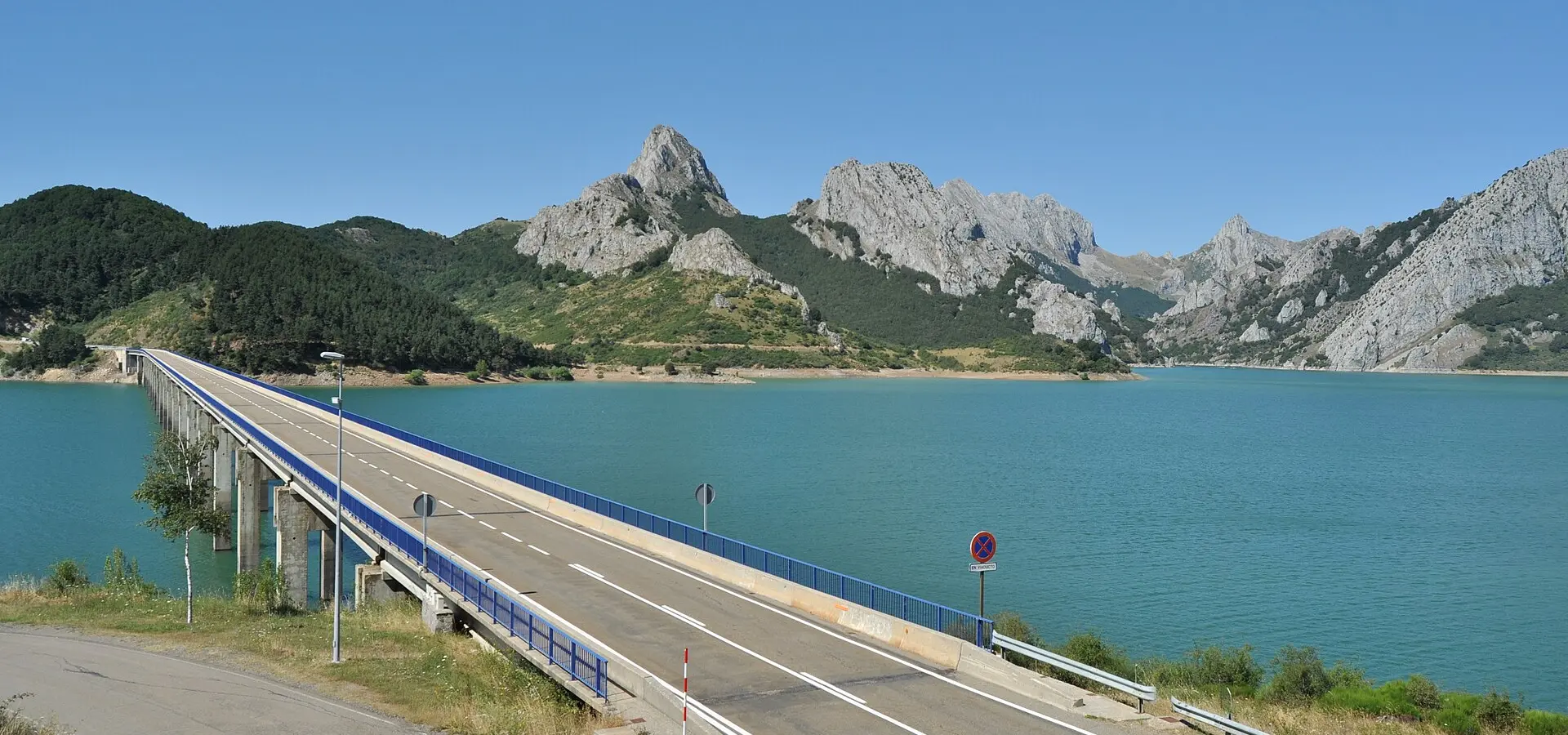
Picos de Europa: Riaño and Pandetrave
Best Season
Frequent snow in November-May. Cool summer. Best June-October.
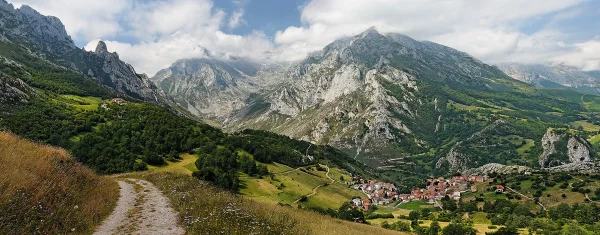
The Leonese side of the Picos de Europa with the Riaño reservoir, the Puerto del Pontón and the legendary ascent to the Puerto de Pandetrave with views of the three massifs.
Highlights
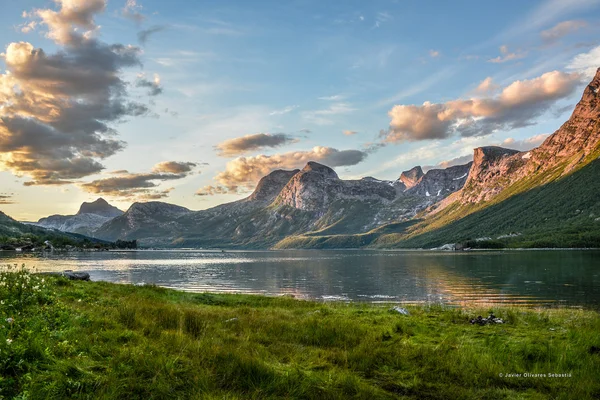
- 1Embalse de Riaño: the "Leonese fjord"
- 2Puerto del Pontón (1,280 m)
- 3Puerto de Pandetrave (1,562 m): views of the three massifs
- 4Posada de Valdeón
About this route
The Embalse de Riaño is probably the most cinematic man-made landscape in all of Spain. When you see it for the first time —especially from the Mirador de Pandetrave or from the road coming up from the south— it seems impossible that something so reminiscent of a Norwegian fjord could exist in the very heart of León. The turquoise waters surrounded by the vertical walls of the Picos de Europa, the little villages perched on the water's edge, the morning mists drifting at mid-height over the reservoir... it all has an undeniable beauty. But the story behind the landscape is tragic: the reservoir, built between 1961 and 1987, flooded nine entire villages in the valley, forcing more than 600 families to abandon their centuries-old homes.
The flooding operation, finally carried out in the summer of 1987 after years of local protests, was one of the most controversial decisions in 20th-century Spanish water policy. The original villages —Riaño, Pedrosa del Rey, Anciles, Burón, Salio, Éscaro, Huelde, La Puerta and Vegacerneja— were among the oldest and best preserved in the Leonese Cantabrian range, with stone manor houses, Romanesque churches and an intact medieval urban layout. Today "new Riaño", the village built to rehouse the displaced, is a functional but soulless town planted high on the hillside. In years of severe drought, the ruins of the submerged villages re-emerge, creating an almost ghostly image.
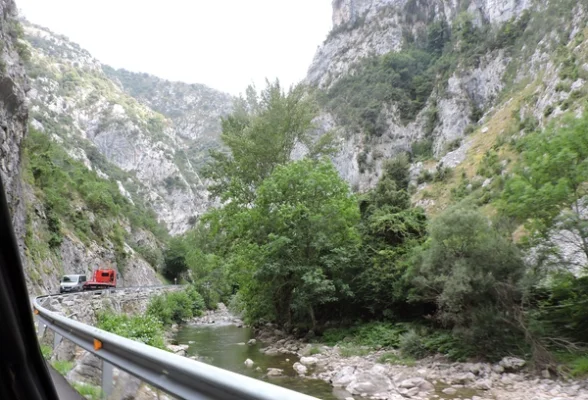
The mountain passes connecting Riaño with the Picos —the Pontón (1,280 m) via the N-625 and Pandetrave (1,562 m) via the LE-243— are two of the most beautiful paved passes in all of Spain. The Pontón is probably the more famous of the two: back in the 18th century it was already crossed by the royal cañada of the Mesta, when transhumant flocks descended from the Asturian valleys toward the Extremaduran pastures. The modern road winds through centuries-old beech forests and alpine meadows, and from its summit offers one of the widest views of the Cantabrian range: on one side the Picos de Europa, on the other the Cordillera Cantábrica fading away to the west.
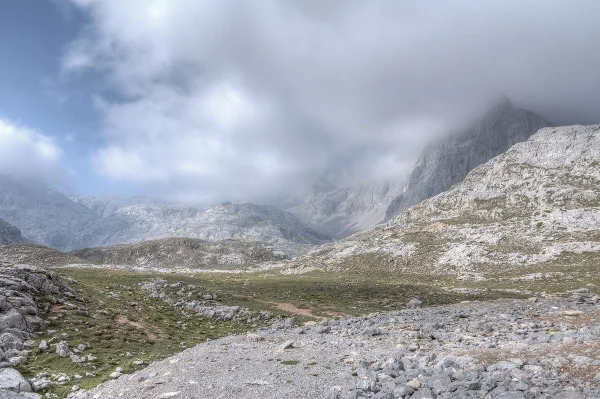
Pandetrave is the most spectacular natural balcony overlooking all three massifs of the Picos de Europa at once. From its 1,562 metres, on a clear day, you can see the Western Massif (with the Cornión and the Lagos de Covadonga in the background), the Central Massif (with the Naranjo de Bulnes and the Torre de Cerredo, the roof of the range) and the Eastern Massif. It is one of the few natural viewpoints on the peninsula from which such a vast mountain area can be taken in at a single glance. The road up is narrow, technical and often deserted; it is especially enjoyable on a motorcycle, but you need to take care because the bends are tight and in some sections the surface is uneven.
Posada de Valdeón, at the bottom of the descent from Pandetrave, is the southern gateway to the Cares and one of the most authentic villages in the Picos. Local potato varieties are still grown here, native cattle are raised and shepherd's cheeses are made that rival any European specialty. The ideal riding season runs from June to October: the passes can have snow and ice from November to May. Fill up in Cistierna or Riaño before heading up. To eat, in Posada de Valdeón the Mesón La Casona serves Leonese stew and meat from the local cows as few other places do. And a tip: descending the Pontón at dawn, with the mists rising from the Sella valley, is one of the most magical visual experiences a rider can have in the north of the peninsula.
Route stops
Puerto del Pontón
Viewpoint
Pass at 1,280 m towards the Picos.
Puerto de Pandetrave
Viewpoint
Pass at 1,562 m with views of the three massifs.
Posada de Valdeón
Village
Village in the heart of Valdeón.
Practical information
Weather
Frequent snow in November-May. Cool summer. Best June-October.
Traffic
Low traffic. Slightly more in August.
Fuel stops
Petrol stations in Cistierna and Riaño.
Where to stay on this route
The towns this route passes through — useful for splitting it into stages or sleeping near the start. Book ahead in high season.
- Posada de ValdeónSee places to stay
- RiañoSee places to stay
Affiliate links: if you book through them, Nomadiq earns a small commission at no extra cost to you.