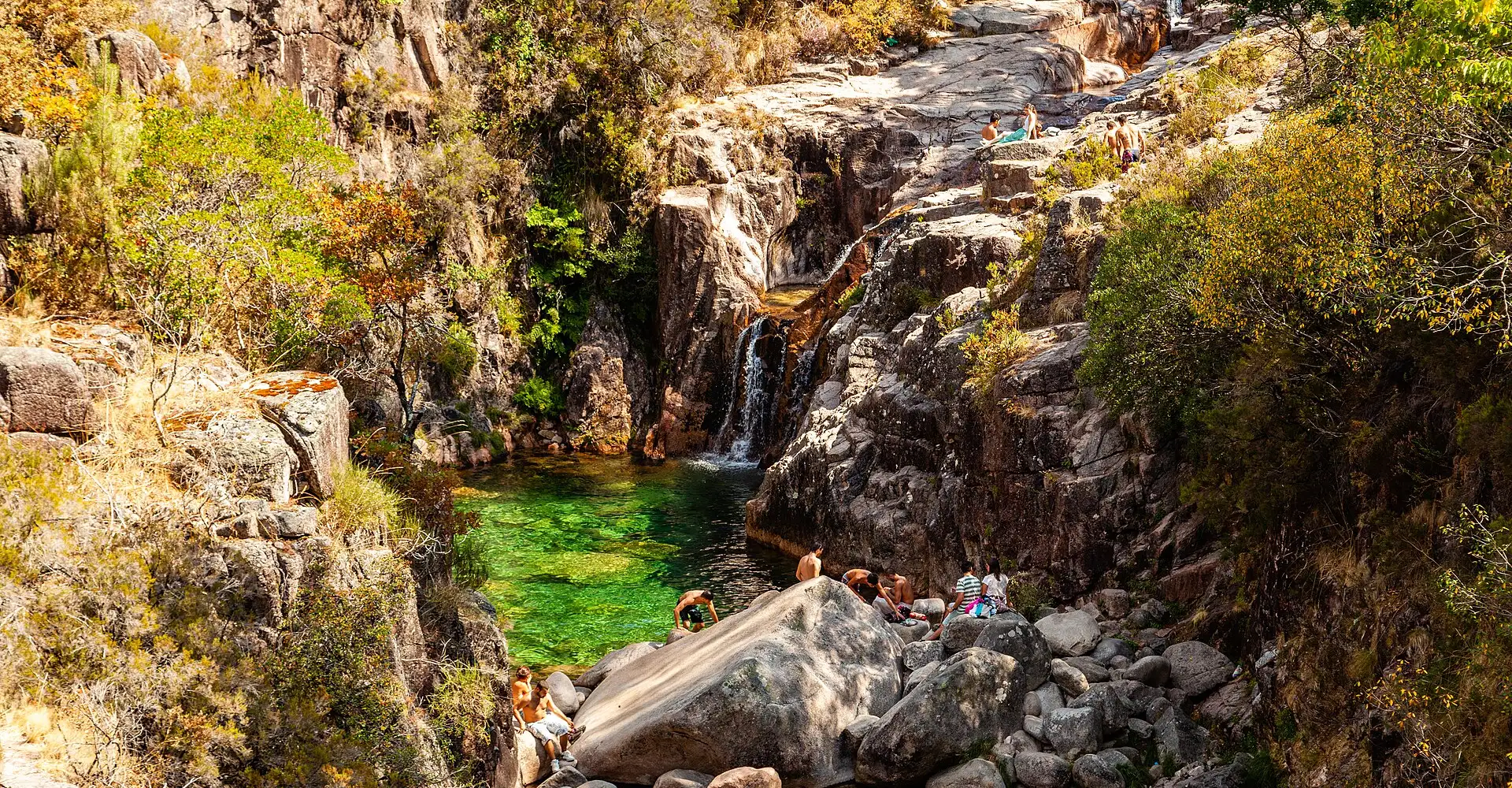
Peneda-Gerês National Park
Portugal's only national park: Peneda-Gerês. Granite mountains, waterfalls, natural pools, abandoned villages and technical roads through the wildest Minho. Border with Galicia.
Checking the route…
Roadbook
5 points- km 0Start
Braga
190 m - km 47.8
Gerês (vila)
440 mSpa village, national park base.
Village - km 107
Pitões das Júnias
1,104 mRuined Cistercian monastery, lost in the forest.
Monument - km 152.9
Lindoso
451 m64 stone granaries next to the medieval castle.
Monument - km 207.6Finish
Braga
190 m
Take the route to Google Maps
- Braga
- Gerês (vila)
- Pitões das Júnias
- Lindoso
- Braga
We add waypoints from the GPX so Google Maps sticks to the route's roads (they show up as extra stops). To follow the exact track, use the GPX.
Profile
28 → 1,205 mRoadbook distances and heights come from the route GPX.
Highlights
- 01Portugal’s only national park
- 02Natural pools and turquoise waterfalls
- 03Pitões das Júnias: a monastery lost in the woods
- 04Lindoso: 64 granaries next to the castle
About this route
Peneda-Gerês is Portugal’s only national park (established in 1971) and, for the adventurous motorcyclist, probably the wildest and best-preserved corner of the whole country. It is a granite massif in the far north-west, on the border with the province of Ourense, where the mountains rise to over 1,400 metres, the rivers form spectacular waterfalls and turquoise natural pools, and the oak and birch forests are centuries old, and the wildlife includes Iberian wolves, deer, golden eagles and the garanos (wild Gerês horses, a native breed that roams freely on the mountain peaks).
The roads in Gerês are the antithesis of a motorway: narrow, technically challenging, with no crash barriers, featuring hairpin bends over precipices and road surfaces that range from excellent to dreadful within just a few kilometres. The N308 between the village of Gerês and Campo do Gerês is probably the most famous stretch: it runs along the shore of the Caniçada reservoir, offering constant views of the turquoise water and the forests on the opposite bank, with bends that demand your full concentration. It’s a road best enjoyed at low speeds, savouring every bend.
The villages of Gerês possess a sense of authenticity that is hard to believe in 21st-century Europe. Villages such as Pitões das Júnias (with the ruins of a 12th-century Cistercian monastery lost in the woods), Tourém (a border village where post-war smugglers used to move cows across the border between Galicia and Portugal at night), or Lindoso (with its 64 espigueiros, 18th-century stone granaries huddled together like toy soldiers beside the castle) preserve a rural way of life that, in many cases, has changed very little over the last hundred years.
The natural pools and waterfalls of Gerês are one of the major attractions of the Portuguese summer. The rivers flowing down from the granite peaks form natural pools of crystal-clear water where locals have been swimming for as long as anyone can remember. The most famous are the Cascatas do Tahiti (so named for the turquoise colour of the water), the Sete Lagoas or Poços Verdes do Sobroso (seven interconnected pools on the River Cabril, near Xertelo) and the spectacular Cascata do Arado, visible from the road.
Motorcycling tips: the roads in the Gerês hinterland are technical and require experience. In summer, the natural swimming pools get very crowded; it’s best to go early or in September. You can cross the border into Galicia without going through a checkpoint via the EM-308 towards Entrimo. For accommodation, the Pousada do Gerês (a historic hotel next to the reservoir) is the option with the most character. For food, in the village of Gerês, any restaurant serves roast kid and arroz de sarrabulho (rice with pig’s blood), two essential Minho specialities.
Practical information
Weather
Frequent rain all year (Portugal's wettest area). Best May-October.
Traffic
Low traffic. Narrow and technical roads.
Fuel stops
Petrol stations in Braga and Gerês village. Scarce inside the park.
Where to stay on this route
The towns this route passes through — useful for splitting it into stages or sleeping near the start. Book ahead in high season.
- Gerês (vila)See places to stay
- Pitões das JúniasSee places to stay
- LindosoSee places to stay
Affiliate links: if you book through them, Nomadiq earns a small commission at no extra cost to you.
Published on