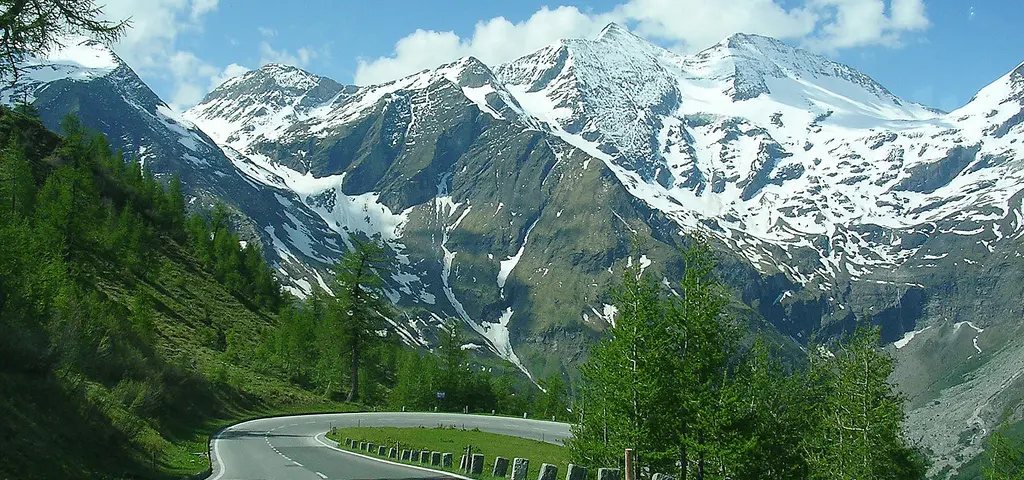
Grossglockner High Alpine Road: King of the Alps
Best Season
Open May-October. Toll with schedule (5:00-21:30). Intense cold at summit even in summer.
The Grossglockner High Alpine Road is Austria's most spectacular alpine road, accessible from the Italian side. 48 km of toll road climbing to 2,504 m with 36 hairpin bends and views of the Pasterze glacier and the Grossglockner (3,798 m).
Highlights
- 1Grossglockner (3,798 m): Austria's highest mountain
- 2Pasterze glacier: the largest in the Eastern Alps
- 336 perfectly engineered hairpin bends
- 4Kaiser-Franz-Josefs-Höhe: head-on viewpoint facing the glacier
About this route
The Grossglockner Hochalpenstrasse is one of those roads that justify an entire trip on their own. Built between 1930 and 1935 as a national prestige project for Austria, this 48 km road connects Salzburg to Carinthia through the heart of the Central Alps, reaching 2,504 metres at the Hochtor (its highest point) and offering a detour to the Kaiser-Franz-Josefs-Höhe (2,369 m), a viewpoint with a head-on vista of the Grossglockner (3,798 m, Austria's highest mountain) and the Pasterze glacier, the largest glacier in the Eastern Alps.
The road is accessible from Italy via Lienz (Austrian East Tyrol) or the Passo di Monte Croce Carnico, making it a natural day trip from the Dolomites. Its layout is a masterpiece of 1930s engineering: 36 hairpin bends perfectly designed for speed and safety, with flawless tarmac that the Austrians maintain with Germanic obsession, and a generous width that lets you enjoy the curves stress-free. Every bend is numbered and signposted, and several feature viewpoints with explanatory panels on the geology, flora and fauna.
The geology of the Grossglockner belongs to the crystalline core of the Alps: gneiss, schists and metamorphic rocks over 500 million years old that form the backbone of the Hohe Tauern, the largest national park in the Alps. The Pasterze glacier, visible from the Kaiser-Franz-Josefs-Höhe, is a dying giant: it has lost more than half its volume over the past 150 years and retreats at a rate of 10–15 metres per year. To see it today is to witness a world that is disappearing.
The gastronomy along the way blends the best of Tyrolean and Carinthian cooking. In Heiligenblut (at the foot of the southern slope), the gasthöfe (inns) serve Käsnocken (cheese-drenched gnocchi), Schweinsbraten (roast pork with sauerkraut), Apfelstrudel with cream and Stiegl beer from Salzburg. At the summit, the Hochtor restaurant offers hot dishes and soups that are very welcome after 2,500 metres of altitude and Alpine cold.
Practical riding info: the Grossglockner is normally open from May to October. The toll is around 29 euros for motorcycles (2024). The road has fixed hours: it opens at 5:00 and closes at 21:30 (last entry at 20:15). The best time for photos of the Grossglockner is morning, when the sun lights up the east face of the mountain. Fuel stations in Bruck/Fusch (north) and Heiligenblut (south). From the Dolomites, allow 1.5–2 hours on the motorway to reach the southern entrance.
Route stops
Heiligenblut
Village
Alpine village at the foot of the Grossglockner with Gothic church.
Kaiser-Franz-Josefs-Hohe (2.369 m)
Viewpoint
Frontal viewpoint of the Grossglockner and Pasterze glacier.
Hochtor (2.504 m)
Viewpoint
Highest point of the road with tunnel and restaurant.
Practical information
Weather
Open May-October. Toll with schedule (5:00-21:30). Intense cold at summit even in summer.
Traffic
Moderate-high traffic July-August. Frequent cyclists. Wide and comfortable road.
Fuel stops
Petrol stations in Bruck/Fusch and Heiligenblut. Nothing on the 48 km road.
Where to stay on this route
The towns this route passes through — useful for splitting it into stages or sleeping near the start. Book ahead in high season.
- HeiligenblutSee places to stay
Affiliate links: if you book through them, Nomadiq earns a small commission at no extra cost to you.
Related routes
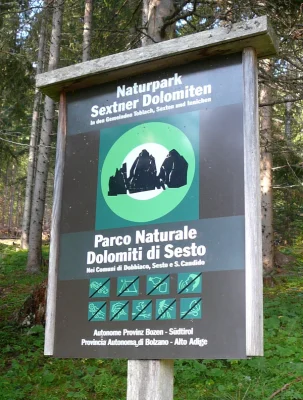
Tre Cime di Lavaredo: Icons of the Dolomites
Dolomites and Italian Alps
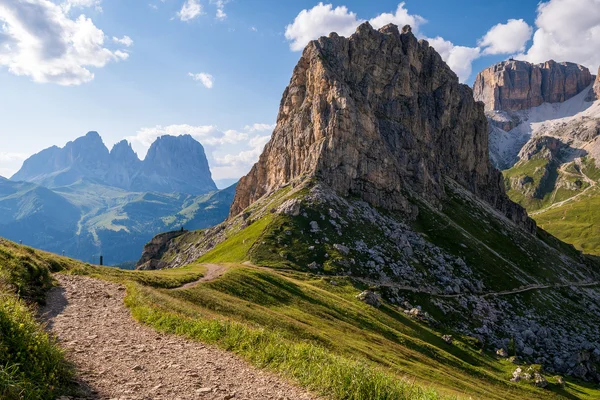
Sella Ronda: the 4 Dolomite Passes
Dolomites and Italian Alps
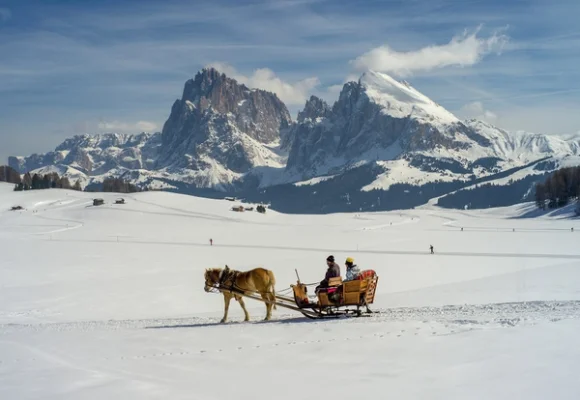
Val Gardena and Alpe di Siusi: the Infinite Meadow
Dolomites and Italian Alps
Road of the 52 Tunnels (Pasubio): the Great War Road
Dolomites and Italian Alps