Les Corniches: Nice, Èze and Monaco
Best Season
Riviera: accessible all year round. It rarely rains.
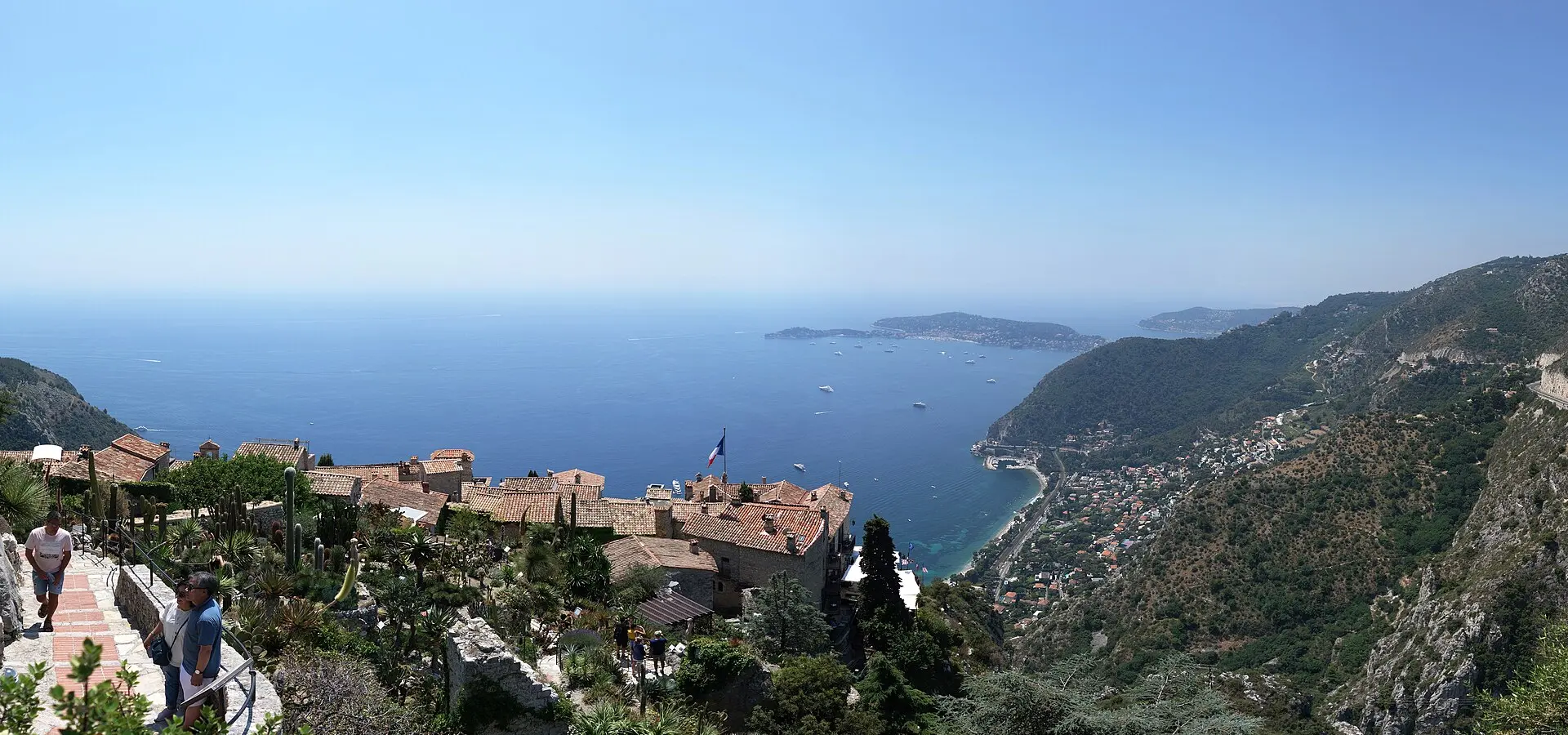
The three Corniches of the French Riviera: the Grande Corniche (panoramic), the Moyenne (Èze and sea views) and the Basse (coastal). From Nice to Monaco on the most glamorous roads of the Mediterranean.
Highlights
- 1Grande Corniche: Napoleonic road at 680 m above the sea
- 2Èze: medieval village with an exotic garden
- 3Monaco: F1 circuit and the Port of Monte-Carlo
- 4Three levels of the same coastline in a single day
About this route
The three corniches of the French Riviera between Nice and Monaco are probably the most famous coastal roads in the entire world. Built in three different eras and at three different heights above the sea, they offer three completely different riding experiences that, combined into a single loop, make for the best short motorcycle day on the entire Côte d'Azur.
The Grande Corniche (D2564), the highest of the three, was built by Napoleon in 1806 along the route of the ancient Via Julia Augusta. It runs at an altitude of between 400 and 680 meters above the sea, offering panoramic views spanning the entire Bay of Villefranche, the cape of Nice, Monaco, and on clear days the Italian coast as far as Liguria. The highest point, the Col d'Èze (507 m), has a viewpoint from which the vista is so spectacular that Alfred Hitchcock chose this road to film the famous chase scene in "To Catch a Thief" (1955) with Grace Kelly and Cary Grant.
The Moyenne Corniche (D6007) is perhaps the best known to tourists because it passes through Èze, a medieval village perched on a sheer cliff 427 m above the sea that is probably the most photogenic village on the entire Riviera. Èze has an exotic garden at the summit with monumental cacti and a 360° panorama that on exceptionally clear days includes Corsica. The road leading to Èze features technical curves and perfect tarmac, and it too served as a film location: the famous Formula 1 race in the movie "Grand Prix" (1966) was partly filmed here.
The Basse Corniche (D6098), the lowest, runs literally at sea level past Villefranche-sur-Mer (one of the most beautiful bays on the Riviera), Beaulieu-sur-Mer (home to Villa Kérylos, a perfect replica of a 5th-century BC Greek villa), and Cap-d'Ail. It is the most touristic and the most congested, but it offers the most immediate experience of the Mediterranean: the blue water just meters away, yachts at anchor, pebble beaches, and the coastal glamour of the Riviera in its purest expression.
Rider tips: the corniches are accessible year-round thanks to the Riviera climate. In summer traffic can be heavy, especially on the Basse Corniche and around Monaco (on Formula 1 Grand Prix days the entire area is closed). The ideal season is spring and autumn. For dining, in Èze the restaurant Les Remparts offers Provençal cuisine with sea views from a hanging terrace. And a tip: ride all three corniches in a single day, starting with the Grande (at dawn, no traffic, best light), then the Moyenne (mid-morning, stop in Èze), and finally the Basse (around noon, to finish at the port of Monaco).
Route stops
Col d'Èze / Grande Corniche
Viewpoint
Panoramic view of the entire bay.
Èze Village
Village
Medieval village with exotic garden.
Mónaco
Village
Principality, casino, F1 circuit.
Practical information
Weather
Riviera: accessible all year round. It rarely rains.
Traffic
High in summer and during the Monaco GP. Better during the week.
Fuel stops
Frequent petrol stations in Nice, Villefranche and Monaco.
Where to stay on this route
The towns this route passes through — useful for splitting it into stages or sleeping near the start. Book ahead in high season.
- Èze VillageSee places to stay
- MónacoSee places to stay
- NiceSee places to stay
Affiliate links: if you book through them, Nomadiq earns a small commission at no extra cost to you.
Related routes
Col de la Bonette: the roof of Europe on a motorbike
Cote d'Azur and Maritime Alps
Route Napoléon: Grasse to Gap
Cote d'Azur and Maritime Alps
Gorges du Verdon
Provence and Camargue
Luberon: hanging villages and lavender
Provence and Camargue