Col du Portalet and Aspe Valley
Best Season
Port open May-November. Possible late snow in spring.
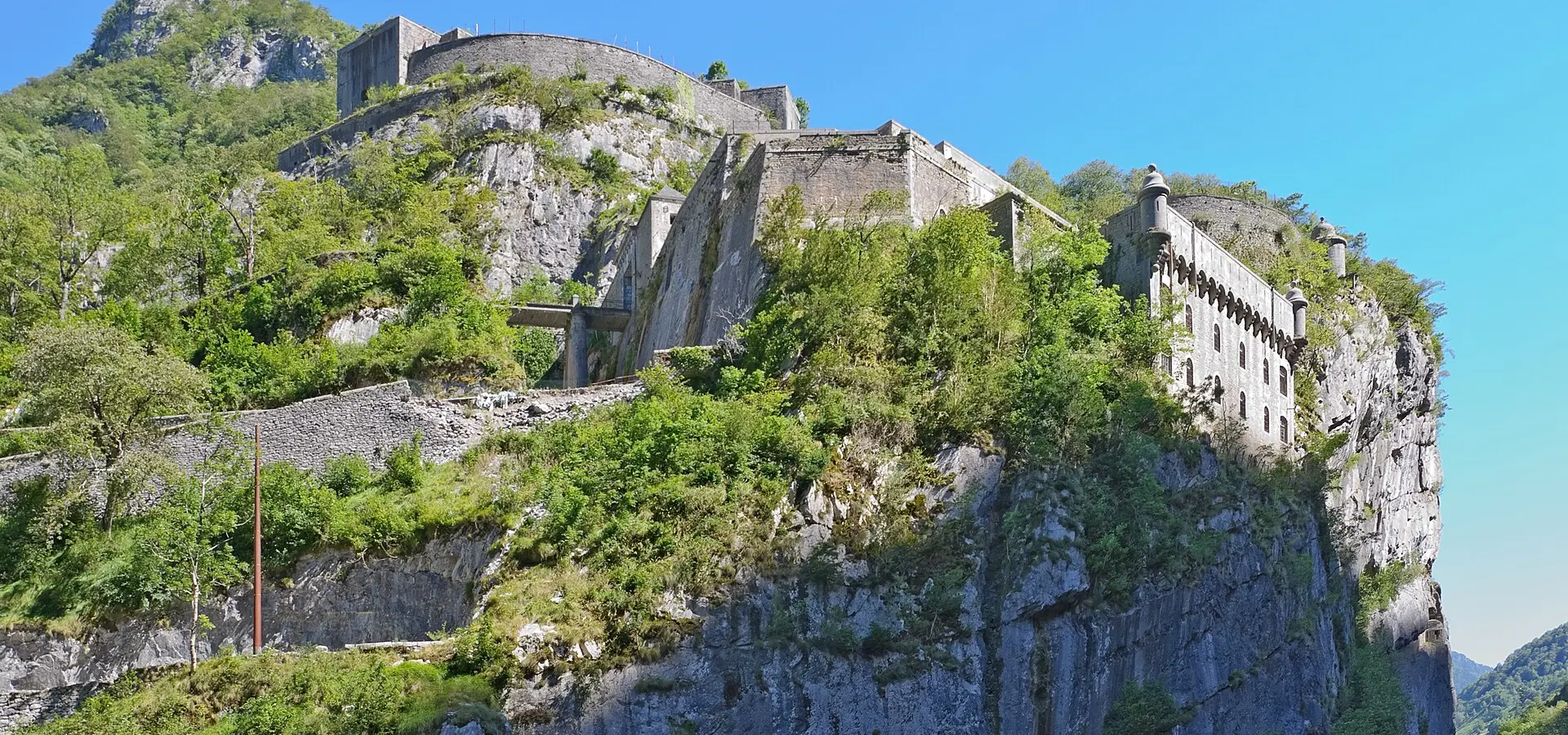
The Col du Portalet (1,794 m), a direct border with Aragon, with the spectacular military fortress of Fort du Portalet hanging over the abyss. Return through the beautiful Aspe Valley.
Highlights
- 1Col du Portalet (1,794 m): border with Aragón
- 2Fort du Portalet: fortress hanging over the abyss
- 3Vallée d'Aspe: the wildest valley in the French Pyrenees
- 4Perfect loop from Aragón
About this route
The Col du Portalet is one of the most spectacular border crossings between France and Spain in the whole Pyrenean range. The N-134 / D934 road climbs from Laruns up through the Vallée d'Ossau to the pass at 1,794 m; already in the Vallée d'Aspe, very close to the Somport, the road runs alongside the Fort du Portalet, a military fortress built between 1842 and 1870 on the orders of Napoleon III directly onto the vertical wall of the Gave d'Aspe gorge. (It's a common mistake to place the fort in the Vallée d'Ossau, due to the name it shares with the mountain pass between the Vallée de Tena and the Vallée d'Ossau, but the fort is actually in the Vallée d'Aspe.) The fort, partly carved into the cliff face, was used as a prison during the Second World War (Marshal Pétain was briefly held here in 1945) and can be visited today.
The French climb to the Portalet is gentler than the Spanish descent towards Sallent de Gállego: the French side winds with wide curves through alpine pastures dotted with shepherds' cabins, while the Spanish side drops sharply down into the Gállego valley with tighter hairpins. For a Spanish rider crossing the border, the feeling of being 'on the other side' of the Pyrenees is immediate: the asphalt is different (smoother, with a different texture), the road signs change from yellow to white, and the villages have architecture completely different from the Aragonese style.
The Vallée d'Aspe, through which you complete the loop heading back north, is probably the wildest and most solitary of all the great valleys of the French Pyrenees. The N-134 runs through it from north to south following the course of the Aspe river, passing through tiny villages such as Accous, Bedous and Etsaut, all with their Pyrenean charm intact. The valley is home to one of the few populations of Pyrenean bears on the French side, and in spring the meadows are covered with wildflowers. The Espalungue gorge, just north of Etsaut, is a stretch of road spectacularly squeezed between rock walls.
For the Spanish rider, this route is the most natural of all excursions into the French Pyrenees: leave from Jaca or Sallent de Gállego on the A-136, cross the Portalet into France, descend through the Vallée d'Ossau to Oloron-Sainte-Marie, and return via the Vallée d'Aspe and the Col du Somport. It is a perfect circular route that combines the two great valleys of the western French Pyrenees and can be done in one long day from Aragón.
Rider's practical notes: the Portalet normally opens in May and closes in November. Snow and ice can appear late in spring. Refuel in Laruns or Sallent de Gállego. For food, in Accous the Auberge Cavalière serves traditional Pyrenean cuisine with valley produce (fromage de brebis, agneau de montagne). One tip: stop at the Fort du Portalet and go inside (modest entry fee). The story of this fortress hanging over the void — military, carceral, abandoned, restored — is fascinating.
Route stops
Fort du Portalet
Monument
Napoleonic fortress over the abyss.
Col du Portalet
Viewpoint
Border pass at 1,794 m.
Accous
Village
Village in the Aspe Valley.
Practical information
Weather
Port open May-November. Possible late snow in spring.
Traffic
Low traffic. Slightly more at the border in summer.
Fuel stops
Petrol stations in Laruns, Oloron-Sainte-Marie and Sallent de Gállego.
Where to stay on this route
The towns this route passes through — useful for splitting it into stages or sleeping near the start. Book ahead in high season.
- Fort du PortaletSee places to stay
- AccousSee places to stay
- LarunsSee places to stay
Affiliate links: if you book through them, Nomadiq earns a small commission at no extra cost to you.