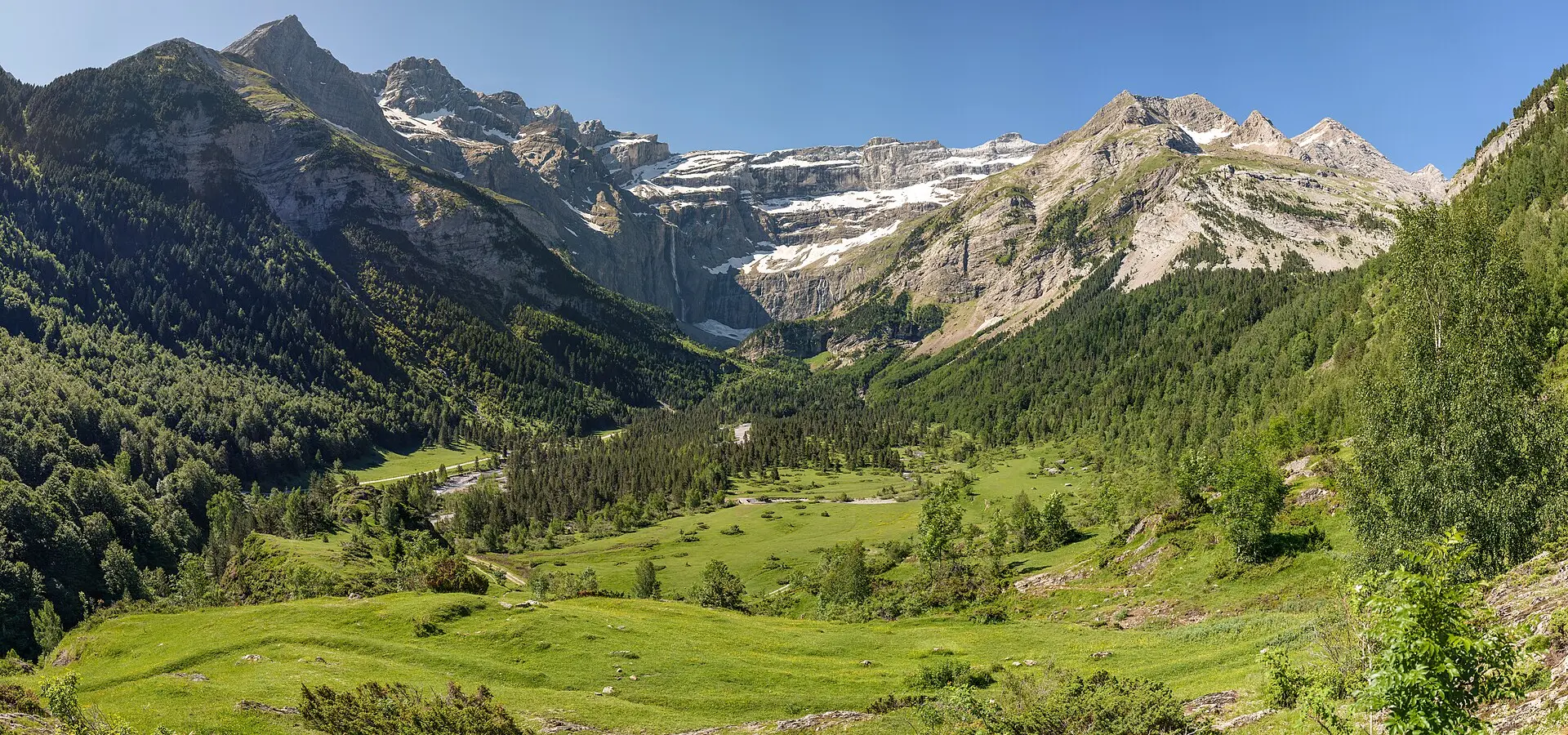
Cirque de Gavarnie
Best Season
Accessible almost all year round. Snow in winter but maintained road. Best June-October.
The Cirque de Gavarnie, a UNESCO World Heritage Site, is the most famous glacial amphitheatre in Europe: 1,500 m of vertical walls with the highest waterfall in France (423 m). Not to be missed.
Highlights
- 1Cirque de Gavarnie (UNESCO): 1,500 m glacial amphitheatre
- 2Grande Cascade: the highest waterfall in France (423 m)
- 3Visual connection with Monte Perdido (3,355 m)
- 4D921: gentle climb through Pyrenean meadows
About this route
The Cirque de Gavarnie is probably the most impressive geological formation in the entire Pyrenean range and one of the most spectacular in Europe. It is a glacial amphitheatre in the shape of a perfect horseshoe, with vertical walls up to 1,500 metres high, where the Grande Cascade de Gavarnie is born — the highest waterfall in France and one of the highest in Europe, with its 423 metres of free fall. When Victor Hugo visited Gavarnie in 1843, he described it as 'the colosseum of nature' and 'the most mysterious of mysterious things'. It was declared a UNESCO World Heritage Site in 1997 together with Monte Perdido on the Spanish side.
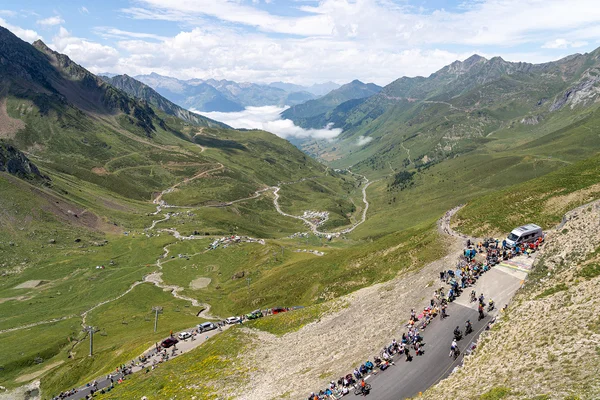
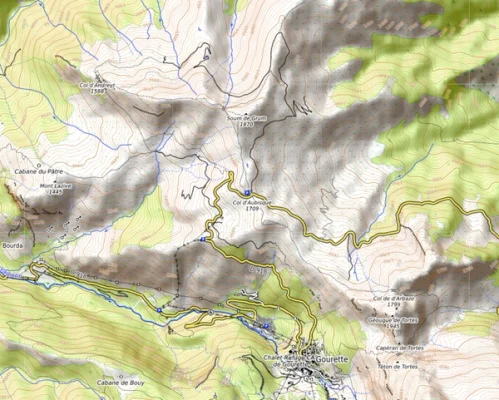
The D921 road that climbs from Luz-Saint-Sauveur up to the village of Gavarnie is one of the most beautiful in the French Pyrenees. It ascends gently along the Gave de Pau valley, passing through villages like Gèdre (with its Maison du Parc National where you can get information about the trails) and high-mountain meadows where thousands of sheep and cows graze in summer. The final stretch before Gavarnie narrows and becomes more technical, with tight bends and the river roaring at the bottom of the ravine.
The village of Gavarnie itself is a tiny hamlet at 1,357 m altitude, entirely oriented towards mountain tourism for more than 150 years. From here you can reach the foot of the cirque on foot via an easy 5 km trail (1.5 hours) or on horseback (there is a donkey and horse service that has been running since the 19th century and gives the walk a wonderfully anachronistic charm). Parking the bike at the village car park and walking to the foot of the waterfall is an experience no rider should miss: the first time you see those 1,500 m walls closing in on you is a moment of geological vertigo that is hard to forget.
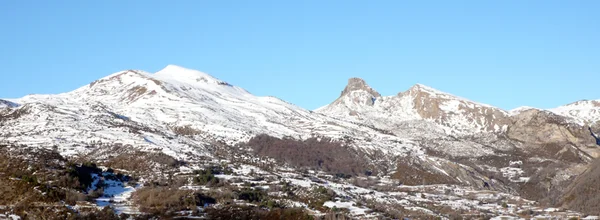
The Spanish border is just 3 km to the south, via the Puerto de Bujaruelo (a superb detour on a trail bike), and Monte Perdido (3,355 m, the third highest summit in the Pyrenees) is perfectly visible from the Cirque. The geological connection between Gavarnie and Ordesa (on the Spanish side) is complete: they are the same limestone massif seen from two different slopes, which is why UNESCO protected them jointly.
Rider's practical notes: the D921 is open all year round up to Gavarnie village (it is a service road), but snow can complicate access in winter. Best from June to October. Refuel in Luz-Saint-Sauveur. For food, in Gavarnie the Hôtel du Cirque (right at the trailhead) serves a hot Pyrenean garbure that is deeply comforting after the walk. One tip: combining Gavarnie with the climb up the Tourmalet on the same day is perfectly feasible and makes for an epic day of mountain riding.
Route stops
Gèdre
Village
Village with National Park centre.
Gavarnie
Viewpoint
Village at the foot of the glacial cirque.
Practical information
Weather
Accessible almost all year round. Snow in winter but maintained road. Best June-October.
Traffic
Moderate traffic in summer due to tourism. Low off-season.
Fuel stops
Refuelling at Luz-Saint-Sauveur.
Where to stay on this route
The towns this route passes through — useful for splitting it into stages or sleeping near the start. Book ahead in high season.
- GèdreSee places to stay
- Luz-Saint-SauveurSee places to stay
Affiliate links: if you book through them, Nomadiq earns a small commission at no extra cost to you.