Camargue: Saintes-Maries-de-la-Mer and Aigues-Mortes
Best Season
Windy Mediterranean. Heat and mosquitoes in summer. Better in spring and autumn.
The Camargue: white horses, pink flamingos, black bulls, salt marshes and a horizon flat as far as the eye can see. Saintes-Maries-de-la-Mer and the walled citadel of Aigues-Mortes.
Highlights
- 1White horses and black bulls of the Camargue
- 2Pink flamingos in the lagoons
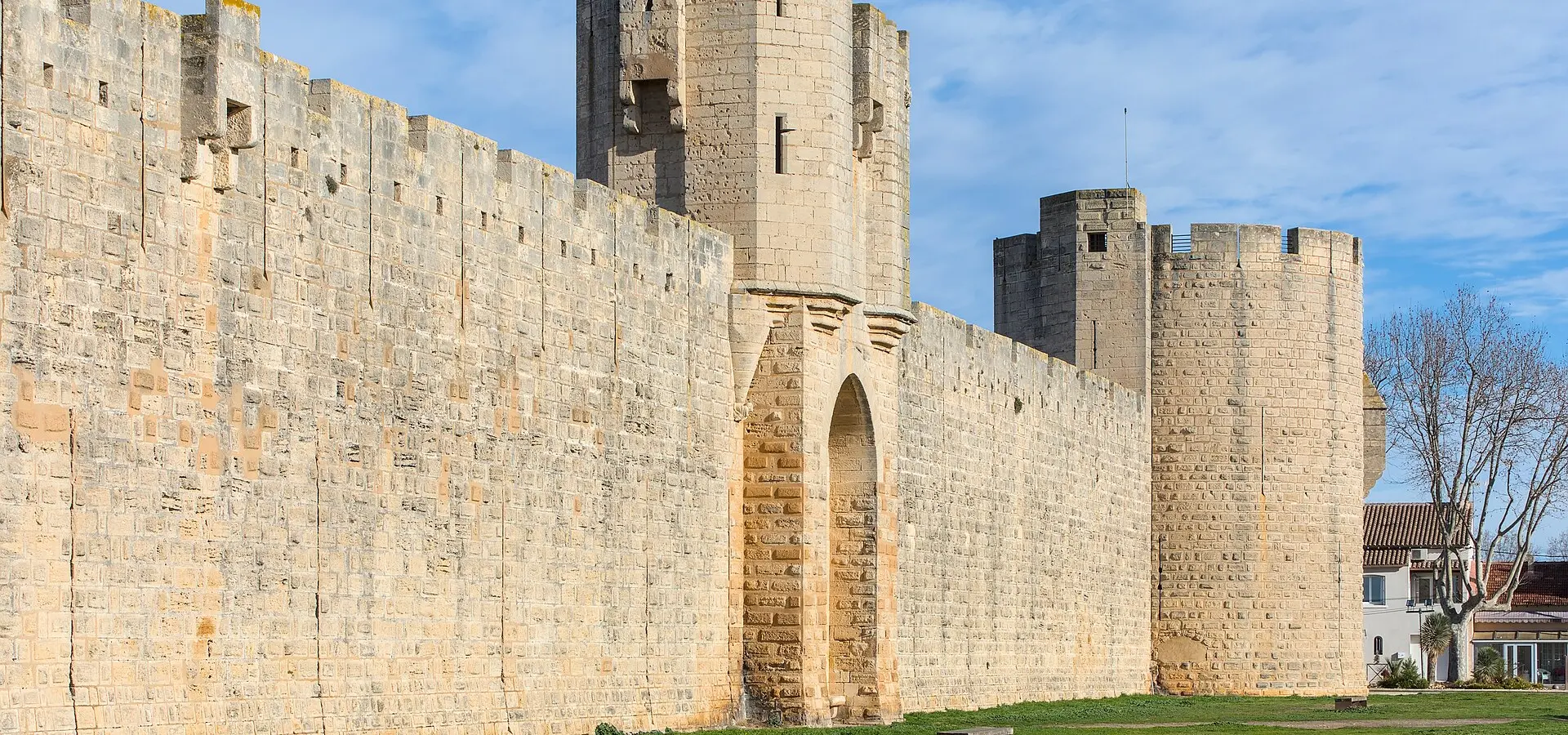
- 3Aigues-Mortes: an intact 13th-century medieval citadel
- 4Saintes-Maries-de-la-Mer: a Romani pilgrimage
About this route
The Camargue is probably the strangest and, at the same time, most beautiful landscape in the whole of France. It is a 930 km² river delta formed by sediments from the Rhône before it flows into the Mediterranean, resulting in an utterly flat landscape — the highest point in the entire Camargue is 4.5 metres above sea level— where marshes, salt marshes, brackish lagoons, wild beaches and an exceptional array of wildlife coexist: the famous white Camargue horses (a native breed that is born black and turns white with age), Camargue bulls (small, black and fierce, used in the courses camarguaises), and above all thousands of pink flamingos that gather in the lagoons, forming patches of colour visible from kilometres away.
The motorbike route through the Camargue is the complete opposite of a mountain route: here there are no bends, no mountain passes, and no need for advanced riding skills. What you do get is an endless horizon, intense Mediterranean light, straight roads flanked by marshes and salt flats, and frequent stops to photograph horses, bulls, flamingos or simply the landscape. It’s a route to be savoured at a leisurely pace, with plenty of time for stops, and one that works particularly well as a contrast to a previous day spent tackling Pyrenean or Alpine mountain passes.
Saintes-Maries-de-la-Mer is the most iconic village in the Camargue and one of the most important centres of pilgrimage in European Romani culture. According to tradition, it was here that Saints Mary Salome and Mary Jacobe (companions of the Virgin Mary) landed, together with their maid Sara, who became the patron saint of the Romani people. Every year, during the festival on 24–25 May, thousands of Romani people from across Europe make a pilgrimage to Saintes-Maries to venerate the statue of Black Sarah in a night-time procession to the sea, which is one of the most striking religious ceremonies in the whole of France.
Aigues-Mortes, at the western tip of the Camargue, is an absolute architectural surprise: a complete 13th-century medieval citadel, with perfectly intact rectangular walls, defensive towers and a medieval town layout that has remained unchanged since Saint Louis (Louis IX) founded it in 1240 as a port of embarkation for the Crusades. The town was literally on the seashore in the 13th century; today, due to sediment build-up from the Rhône, it lies several kilometres from the water, surrounded by salt marshes and wetlands. Climbing the ramparts and walking their entire length offers a panoramic view of the Camargue from a high vantage point.
Suitable for motorcyclists: the Camargue is completely flat, with no technical difficulties whatsoever. Avoid July and August due to the extreme heat, mosquitoes and mass tourism. Spring (April–June) and autumn (September–October) are perfect: the flamingos are in full swing, the salt flats glisten with shades of pink and white, and the temperature is pleasant. Fill up with petrol in Arles or Aigues-Mortes. For a bite to eat, in Saintes-Maries, La Cabane de la Reine restaurant serves Camargue bull stew and Camargue-style fideuà. And here’s a tip: the Parc Ornithologique du Pont de Gau (4 km from Saintes-Maries) lets you watch flamingos at close quarters from wooden walkways. The entrance fee is reasonable and the experience is hard to beat.
Route stops
Saintes-Maries-de-la-Mer
Village
Capital of the Camargue, gypsy pilgrimage.
Aigues-Mortes
Monument
Intact medieval citadel from the 13th century.
Practical information
Weather
Windy Mediterranean. Heat and mosquitoes in summer. Better in spring and autumn.
Traffic
Low traffic outside summer.
Fuel stops
Petrol stations in Arles, Aigues-Mortes and Saintes-Maries.
Where to stay on this route
The towns this route passes through — useful for splitting it into stages or sleeping near the start. Book ahead in high season.
- Saintes-Maries-de-la-MerSee places to stay
- Aigues-MortesSee places to stay
- ArlesSee places to stay
Affiliate links: if you book through them, Nomadiq earns a small commission at no extra cost to you.
Related routes
Luberon: hanging villages and lavender
Provence and Camargue
Mont Ventoux: the Beast of Provence
Provence and Camargue
Gorges du Verdon
Provence and Camargue
Route Napoléon: Grasse to Gap
Cote d'Azur and Maritime Alps