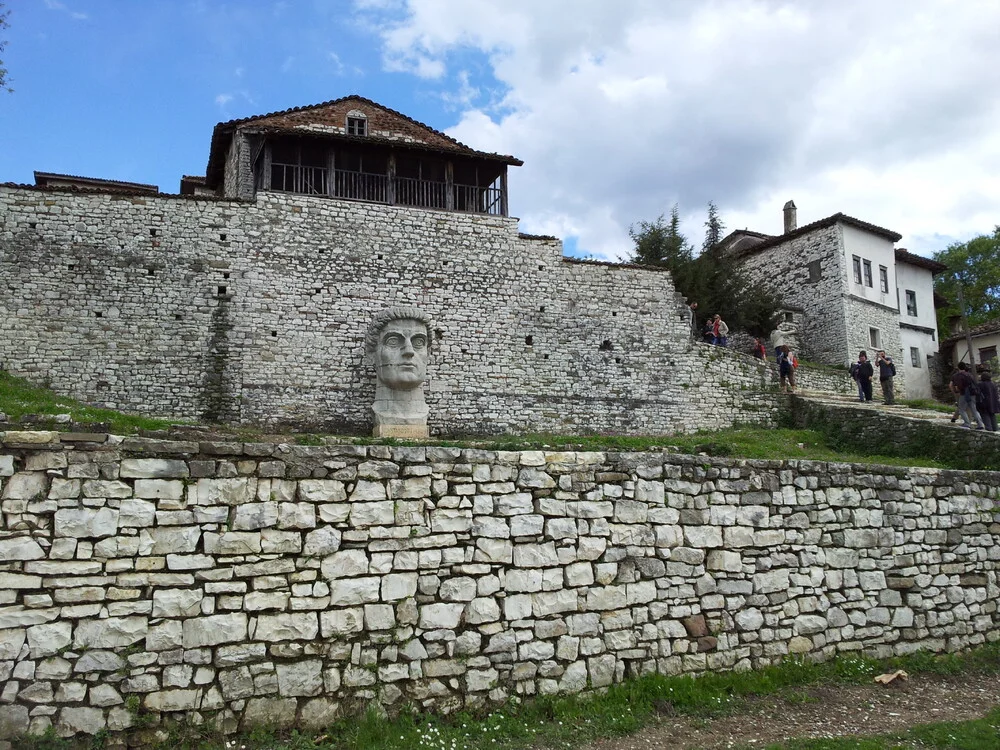
Historic Centres of Berat and Gjirokastra
Albania ·
Description
Berat and Gjirokastra are inscribed as rare examples of an architectural character typical of the Ottoman period. Located in central Albania, Berat bears witness to the coexistence of various religious and cultural communities down the centuries. It features a castle, locally known as the Kala, most of which was built in the 13th century, although its origins date back to the 4th century BC. The citadel area numbers many Byzantine churches, mainly from the 13th century, as well as several mosques built under the Ottoman era which began in 1417. Gjirokastra, in the Drinos river valley in southern Albania, features a series of outstanding two-story houses which were developed in the 17th century. The town also retains a bazaar, an 18th-century mosque and two churches of the same period.
Image Gallery
Why It's a World Heritage Site
These two fortified historic centres are remarkably well preserved, and this is particularly true of their vernacular buildings. They have been continuously inhabited from ancient times down to the present day. Situated in the Balkans, in Southern Albania, and close to each other, they bear witness to the wealth and diversity of the urban and architectural heritage of this region. Berat and Gjirokastra bear witness to a way of life which has been influenced over a long period by the traditions of Islam during the Ottoman period, while at the same time incorporating more ancient influences. This way of life has respected Orthodox Christian traditions which have thus been able to continue their spiritual and cultural development, particularly at Berat. Gjirokastra was built by major landowners. Around the ancient 13th century citadel, the town has houses with turrets (the Turkish kule) which are characteristic of the Balkans region. Gjirokastra contains several remarkable examples of houses of this type, which date from the 17th century, but also more elaborate examples dating from the early 19th century. Berat bears witness to a town which was fortified but open, and was over a long period inhabited by craftsmen and merchants. Its urban centre reflects a vernacular housing tradition of the Balkans, examples of which date mainly from the late 18th and the 19th centuries. Criterion (iii): Berat and Gjirokastra bear outstanding testimony to the diversity of urban societies in the Balkans, and to longstanding ways of life which have today almost vanished. Criterion (iv): Together, the two towns of Gjirokastra and Berat bear outstanding testimony to various types of monument and vernacular urban housing during the Classical Ottoman period.
UNESCO Criteria
Frequently Asked Questions
Berat and Gjirokastra were inscribed as World Heritage Sites in 2005 as outstanding examples of well-preserved Ottoman towns. They represent the coexistence of various religious and cultural communities, featuring unique vernacular architecture combining Byzantine and Ottoman influences.
Gjirokastra was originally inscribed in 2005, and Berat was added as an extension in 2008, together forming the 'Historic Centres of Berat and Gjirokastra' site.
Both cities are in Albania. Berat is located in central Albania, while Gjirokastra is situated in the Drinos river valley in southern Albania. The coordinates are approximately 40.07°N, 20.14°E.
It is a Cultural World Heritage Site, recognized for its outstanding vernacular buildings and urban architecture from the Classical Ottoman period.
The site meets criteria (iii) - testimony to cultural tradition, and (iv) - example of building or landscape type. They represent the diversity of urban societies in the Balkans and traditional ways of life.