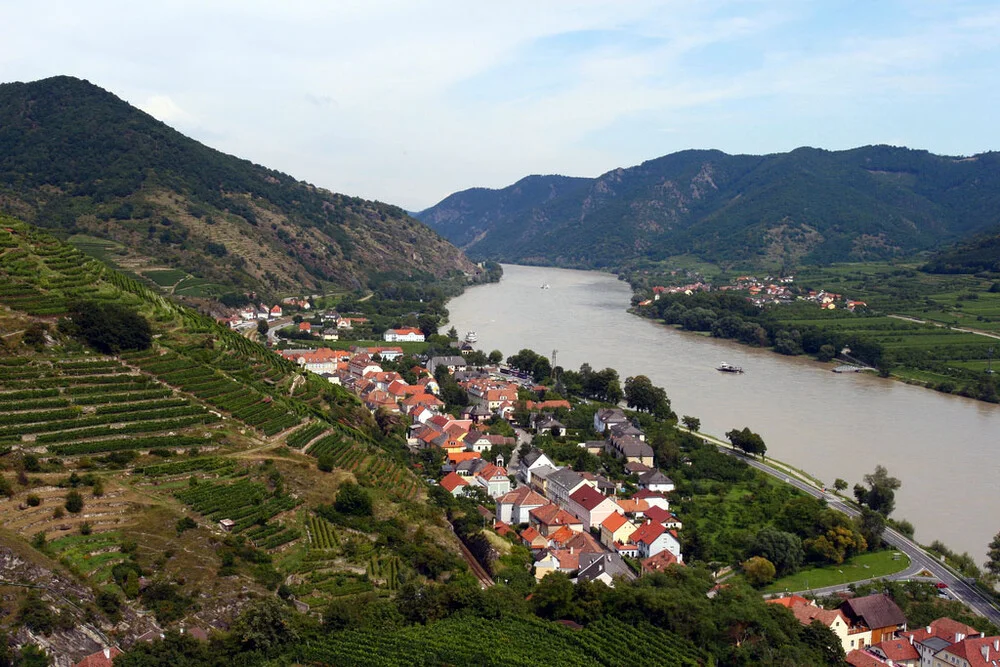
Wachau Cultural Landscape
Austria ·
Description
The Danube winds 36 kilometers between Melk and Krems through a valley where grape cultivation has been practiced since the Romans. Dry stone terraces climb slopes crowned by ruined castles and villages with pastel-colored houses. Melk Abbey, a masterpiece of Austrian baroque, dominates the western end. Wachau's Grüner Veltliner wines are among the world's finest whites. It's Austria at its most idyllic.
Why It's a World Heritage Site
Wachau is an outstanding example of riverine cultural landscape combining architecture, agriculture, and nature in exceptional harmony. The vineyard terraces document centuries of viticulture while the villages, castles, and abbeys represent key stages of Central European development.
UNESCO Criteria
Frequently Asked Questions
Danube boats connect villages with spectacular views. Cycling the Danube path is popular. Car allows more flexibility for visiting wineries.
Dürnstein (where Richard the Lionheart was imprisoned), Spitz (wine center), Weissenkirchen (fortified church), and of course Melk (the must-see abbey).
Yes, wineries (Heurigen) offer tastings and meals. Grüner Veltliner is the signature wine. September-October is harvest season with festivals.
One day allows seeing Melk, one village, and cruising. Two days allow cycling, more villages, and wineries. It's a perfect day trip from Vienna.
Train to Melk (1 hour), then Danube boat downstream to Krems (3 hours). Or vice versa. The combined train+boat ticket is the most practical option.