Taj Mahal
India ·
Description
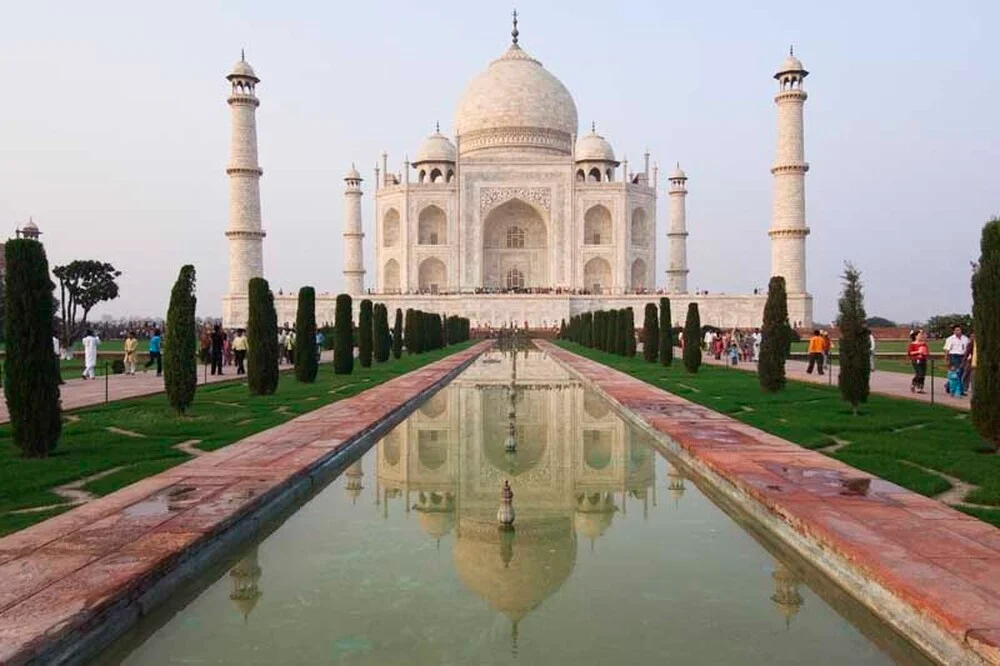
The Taj Mahal is a marble tear on the cheek of time. Shah Jahan built it for Mumtaz Mahal, and 20,000 craftsmen took 22 years to create this symphony of perfect symmetry. At sunrise, the marble turns pink; at sunset, gold. And under the full moon, it seems to float above the gardens like a dream from another world.
Why It's a World Heritage Site
The Taj Mahal represents the pinnacle of Mughal architecture, fusing Persian, Islamic and Indian traditions. Its perfect symmetry, masterful use of light and char bagh gardens make it a universal masterpiece of world heritage.
UNESCO Criteria
Frequently Asked Questions
For being a masterpiece of Mughal architecture and universal symbol of love, with exceptional construction and inlay techniques.
It was inscribed in 1983 under criterion (i).
In Agra, Uttar Pradesh, India, on the banks of the Yamuna River.
At sunrise to avoid crowds and see the pink marble; full moon nights are magical.
The white Makrana marble reflects ambient light: pink at dawn, white at noon, golden at sunset.