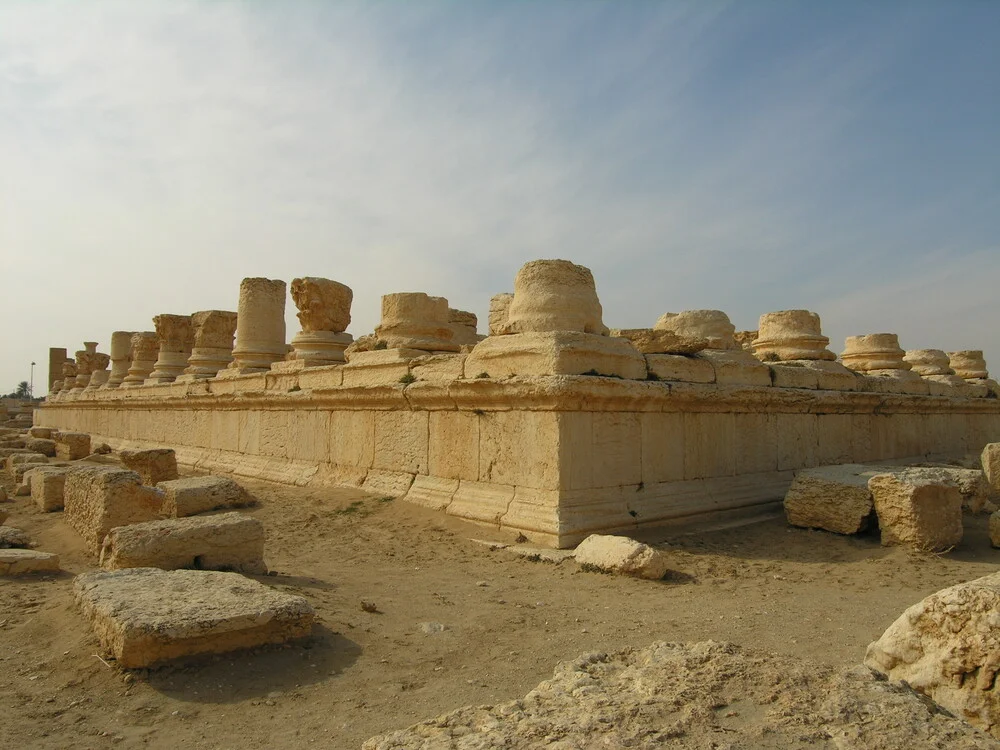
Site of Palmyra
Syrian Arab Republic ·
Description
Palmyra prospered as a caravan oasis on the Silk Road between the 1st and 3rd centuries AD, reaching its peak under Queen Zenobia who briefly defied Rome. Its colonnaded street, Temple of Bel and funerary towers blended Greco-Roman, Iranian and local artistic traditions into a style unlike any other in the ancient world. Islamic State destroyed parts of the site in 2015-2016; international restoration efforts continue.
Why It's a World Heritage Site
UNESCO recognized Palmyra for the outstanding universal value of its monuments which illustrate the unique character of the caravan cities of the Roman East and their exceptional artistic fusion.
UNESCO Criteria
Frequently Asked Questions
Check travel advisories; access depends on security conditions in Syria and is currently very limited.
Most of the site still stands. The Temple of Bel cella, the Arch of Triumph and some tower tombs were destroyed but the vast colonnades and agora survive.
A 3rd-century queen who led a short-lived Palmyrene empire stretching from Egypt to Anatolia before being defeated by Aurelian.
Yes, UNESCO and international partners are restoring damaged monuments, though work is slow due to ongoing instability.
Early morning or sunset when the desert light turns the stone gold.