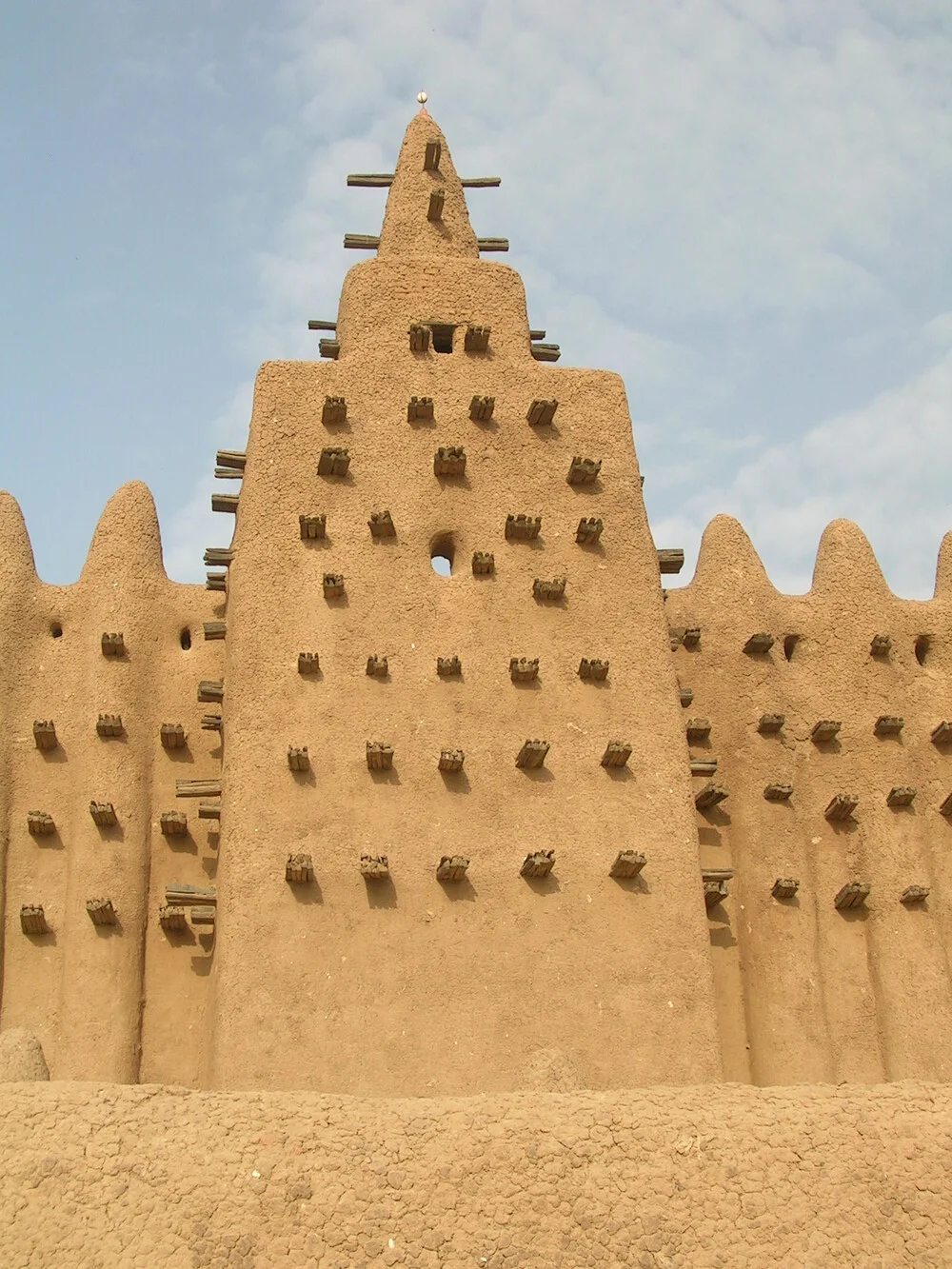
Old Towns of Djenné
Mali ·
Description
Djenné was inhabited since the 3rd century BC and became a major Sahelian commercial hub by the 9th century. The Great Mosque, rebuilt in 1907 in the traditional Sudano-Sahelian style, is the largest mud-brick building in the world and is re-plastered every year during the Crépissage festival. The town’s two-story earthen houses carry on a vanishing architectural tradition.
Why It's a World Heritage Site
UNESCO recognized Djenné as an outstanding example of traditional Sahelian architecture and for its association with pre-Islamic urbanism in West Africa.
UNESCO Criteria
Frequently Asked Questions
No, since 1996 entry has been restricted to Muslims only.
Security in central Mali has been very difficult for years. Check current advisories and local conditions.
Usually in April, after the rainy season, when the community replasters the mosque.
A huge, photogenic weekly market in front of the mosque drawing traders from the Inner Niger Delta.
Historically via Mopti (130 km), although travel is currently limited by security restrictions.