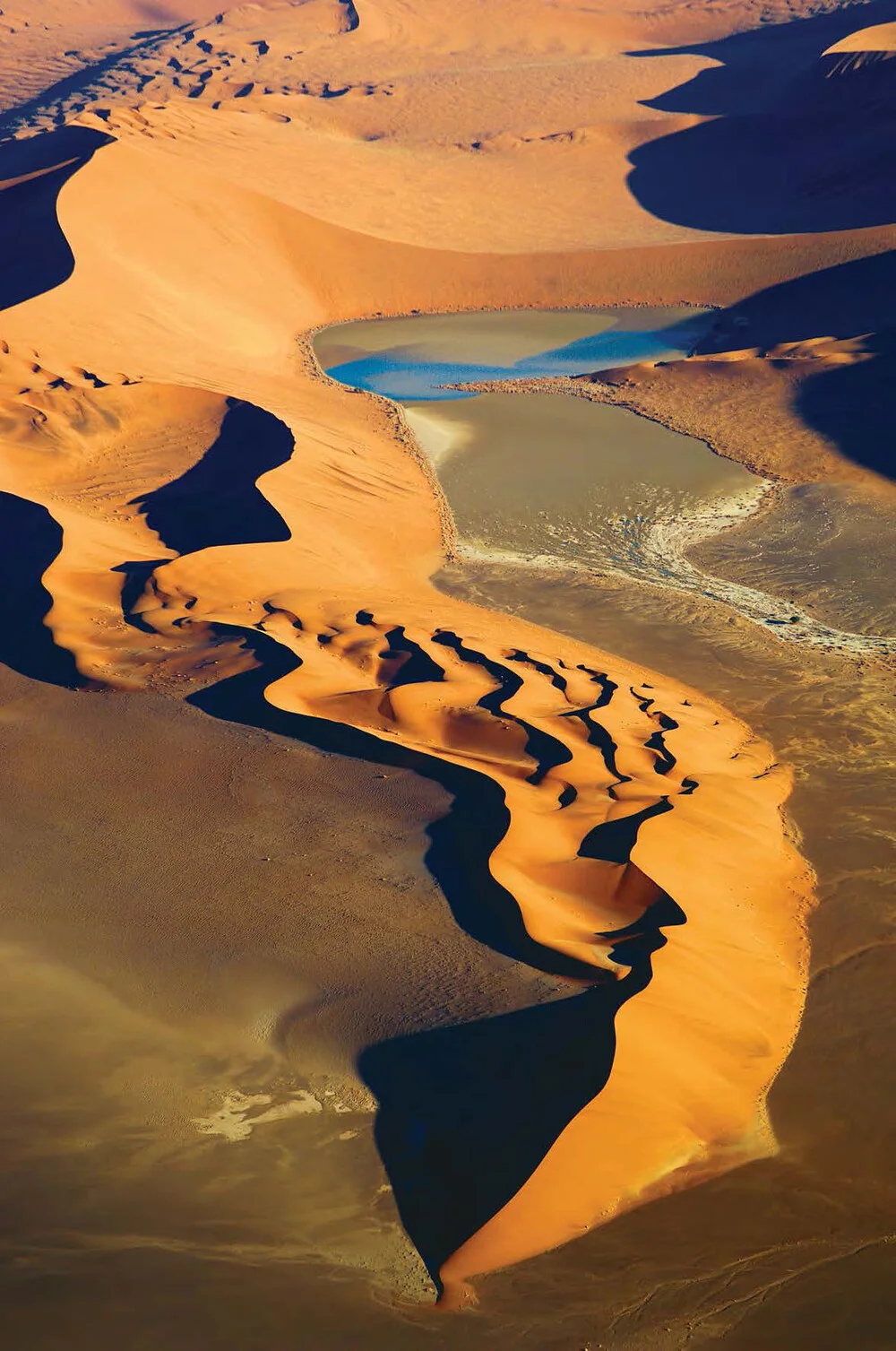
Namib Sand Sea
Namibia ·
Description
The Namib Sand Sea stretches along Namibia’s Atlantic coast, a 3 million-hectare sea of shifting dunes sculpted by fog drifting inland from the cold Benguela Current. Its red and apricot dunes — some over 300 m high, among the tallest on Earth — host specialized life forms adapted to extract water from fog. At Sossusvlei and Deadvlei, dead camel thorn trees stand against cracked white clay pans framed by towering orange dunes.
Why It's a World Heritage Site
UNESCO recognized the Namib Sand Sea for its exceptional natural beauty, its geomorphological processes and its unique ecosystems adapted to extreme aridity and coastal fog.
UNESCO Criteria
Frequently Asked Questions
Dune 45 at sunrise is the classic, Big Daddy for hardcore hikers overlooking Deadvlei.
Sesriem has a few lodges and a campsite inside the park gate, giving first access at sunrise.
May-September for cooler temperatures; avoid midday heat year-round.
Absolutely. It’s a 1 km walk through soft sand from the parking, and is one of the most photographed landscapes in Africa.
Oryx, springbok, ostriches and black-backed jackals are regulars despite the harsh conditions.