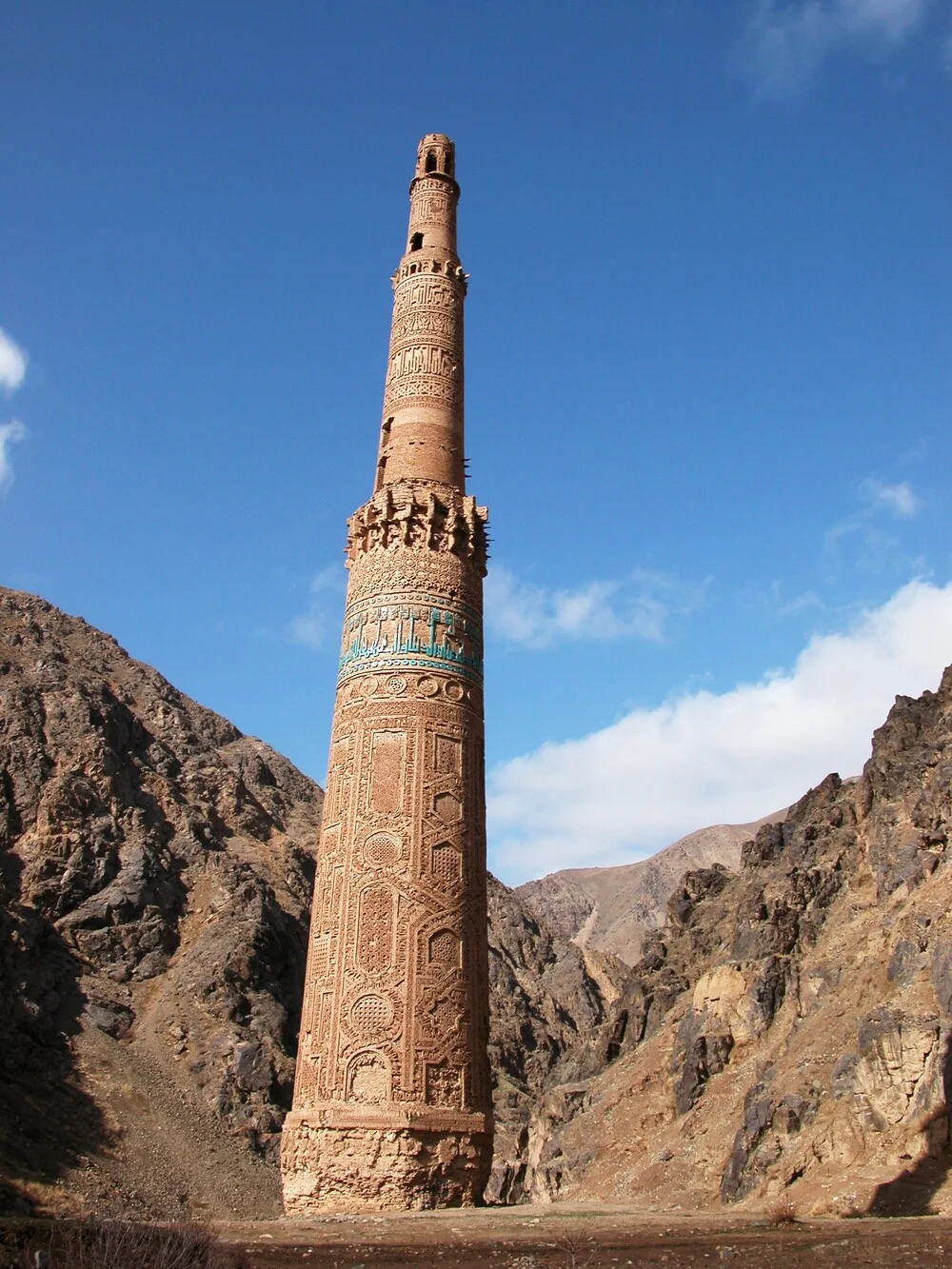
Minaret and Archaeological Remains of Jam
Afghanistan ·
Description
Rising 65 meters in a remote Afghan valley, the Minaret of Jam emerges as a beacon of medieval Islamic architecture. Its intricate decoration of bricks, stucco, and turquoise tiles tells the story of the 12th-century Ghurid Empire. Surrounded by mountains and rivers, this solitary monument defies time and adversity, recalling a forgotten era of splendor.
Image Gallery
Why It's a World Heritage Site
The Minaret of Jam is a masterpiece of Islamic architecture, featuring technical and artistic innovations that influenced later constructions, including the Qutub Minar in Delhi. Its remote location has preserved it but also makes it vulnerable. Listed as World Heritage in Danger, it represents the legacy of the Ghurid Empire that dominated from Iran to India.
UNESCO Criteria
Frequently Asked Questions
It is a masterpiece of 12th-century Islamic architecture, with exceptional decoration and techniques that influenced later monuments like the Qutub Minar.
It was inscribed in 2002 and immediately placed on the List of World Heritage in Danger due to its structural fragility and isolation.
It is located in a remote valley in central Afghanistan, in Ghor province, at the confluence of the Hari and Jam rivers.
It stands 65 meters tall, making it the second tallest brick minaret in the world after the Qutub Minar.
It was built by the Ghurid Empire in the 12th century, possibly to commemorate victory over the Ghaznavids.