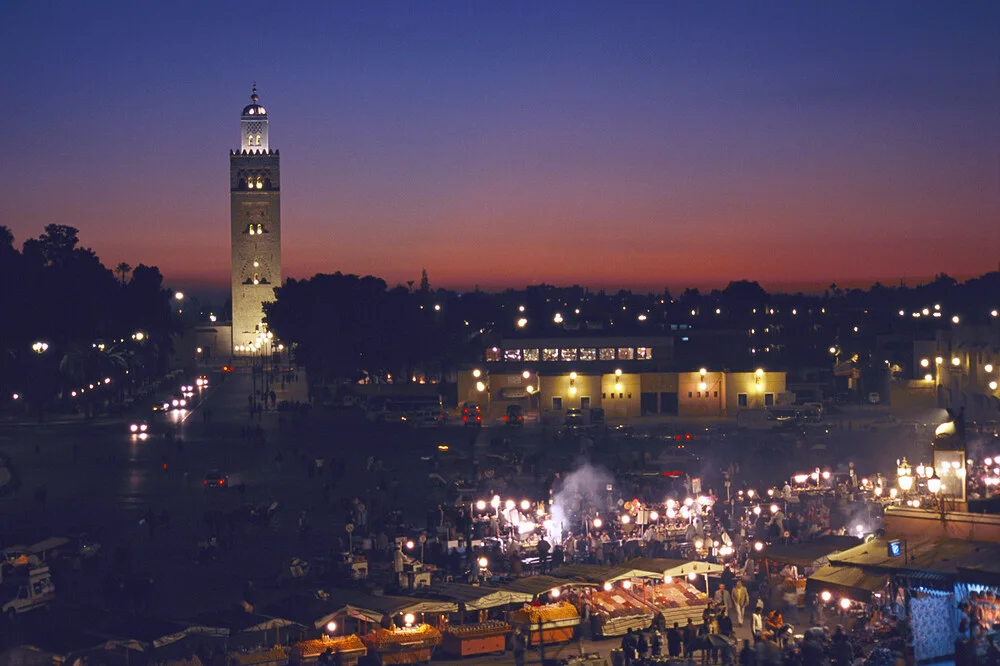
Medina of Marrakesh
Morocco ·
Description
Marrakesh has seduced travelers for a thousand years with its organized chaos. Jemaa el-Fna square transforms every evening into an open-air theater of snake charmers, Gnawa musicians, and steaming food stalls. The souks specialize by trade — leather, spices, carpets, metal — in alleys where craftsmanship is passed down through generations. Behind unpretentious doors, riads with tiled courtyards and orange trees offer oases of calm amid the bustle.
Why It's a World Heritage Site
Marrakesh represents an exceptional example of a medieval Islamic city, preserving its original urban fabric including walls, monumental gates, mosques, and traditional souks. Jemaa el-Fna square was also recognized as Intangible Cultural Heritage for its unique oral tradition.
UNESCO Criteria
Frequently Asked Questions
Getting lost is inevitable and part of the experience. Use offline Google Maps, learn some landmarks, and always ask for 'Jemaa el-Fna' to orient yourself.
A firm but friendly 'la, shukran' (no, thanks) works. Don't show interest if you don't want to buy. Bargaining is expected: start by offering 1/3 of the asking price.
Bahia Palace, Saadian Tombs, Ben Youssef Madrasa, Majorelle Garden (Yves Saint Laurent), and the dyers' and tanners' souks.
Generally yes. Choose stalls crowded with locals. Stall numbers help identify them. Lamb and skewers are safe if well-cooked.
March-May and October-November have ideal weather. Summer exceeds 40°C. Ramadan changes schedules but has special evening atmosphere.