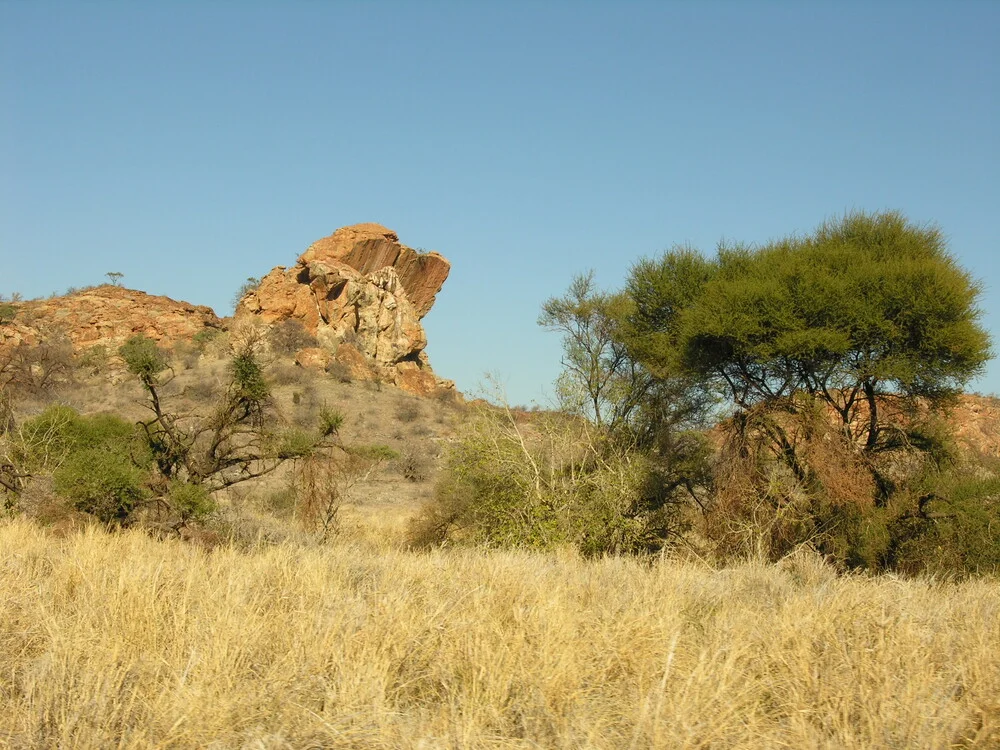
Mapungubwe Cultural Landscape
South Africa ·
Description
Mapungubwe was southern Africa's most powerful kingdom a thousand years ago. Atop a sandstone hill, kings lived separated from commoners, trading gold and ivory with Arabia. The golden rhino found in a royal tomb is now South Africa's symbol. Ruins tell the story of a civilization that mysteriously collapsed.
Why It's a World Heritage Site
Mapungubwe represents the development of southern Africa's first complex society (900-1300 AD). Archaeological finds include the famous golden rhino. The landscape shows the transition from agricultural societies to trading states.
UNESCO Criteria
Frequently Asked Questions
For representing southern Africa's first complex society with exceptional archaeological finds.
It was inscribed in 2003 under criteria (ii), (iii), (iv) and (v).
An 800-year-old gold figurine; South Africa's national symbol, in Pretoria University Museum.
At the confluence of Limpopo and Shashe rivers, border of South Africa, Botswana and Zimbabwe.
Probably climate change and resource depletion; population migrated toward Great Zimbabwe.