Cultural Landscape and Archaeological Remains of the Bamiyan Valley
Afghanistan ·
Description
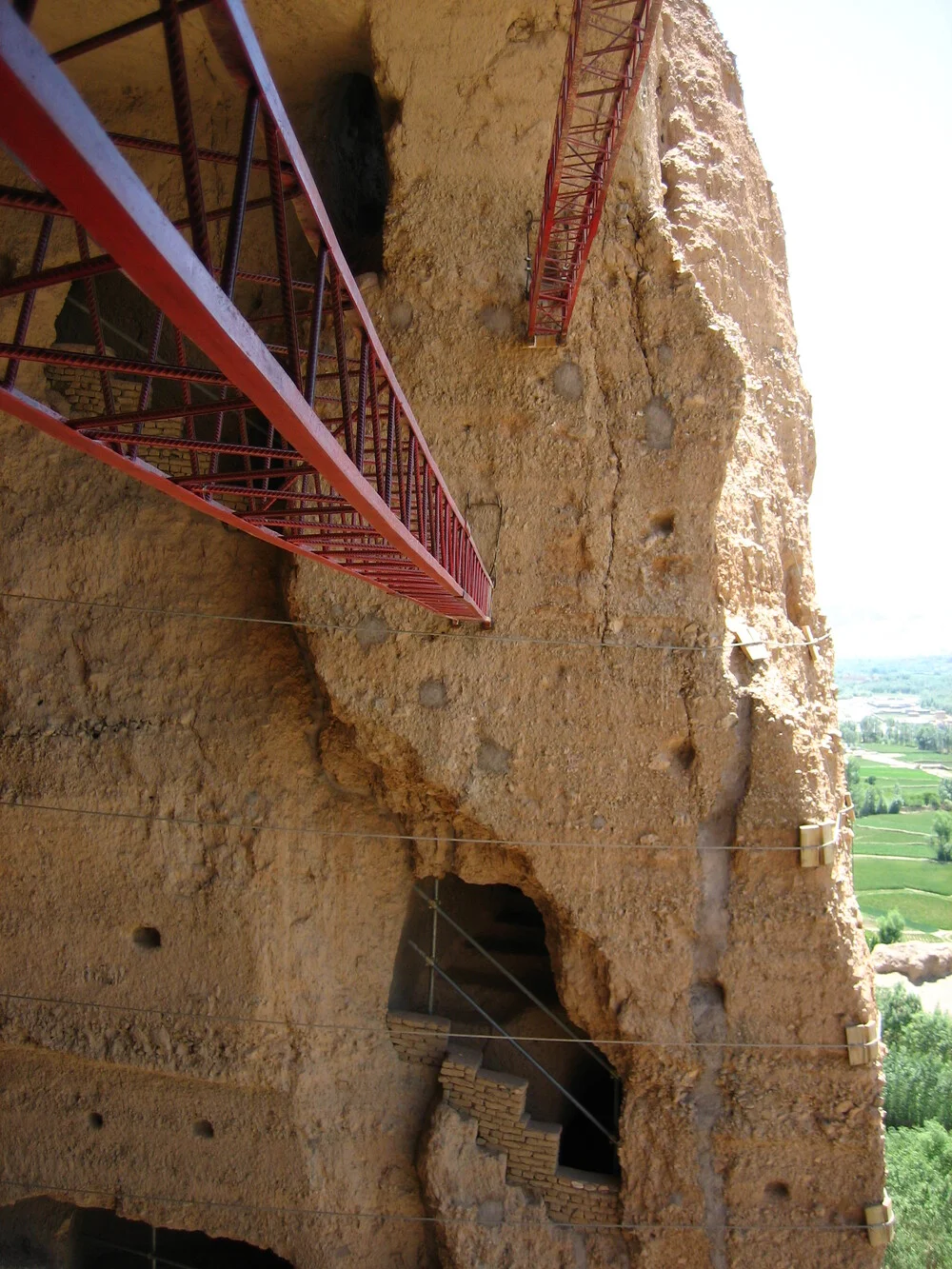
Nestled in the heart of the Hindu Kush mountains, the Bamiyan Valley holds echoes of a Buddhist civilization that flourished for over a millennium. The empty niches where giant Buddha statues once stood, destroyed in 2001, now serve as powerful symbols of cultural heritage fragility. Painted caves and rock-carved monasteries invite reflection on the cross-cultural exchanges along the ancient Silk Road.
Image Gallery
Why It's a World Heritage Site
The Bamiyan Valley represents a unique confluence of artistic influences: Indian, Hellenistic, Roman, and Sasanian merged here to create the Gandharan school of Buddhist art. Rock-cut monasteries with paintings dating from the 3rd to 13th centuries testify to Buddhism evolution in Central Asia. Listed as World Heritage in Danger, the site reminds us of our collective duty to protect shared heritage.
UNESCO Criteria
Frequently Asked Questions
It represents the confluence of Indian, Hellenistic, and Sasanian artistic traditions in the Gandharan school of Buddhist art, featuring monasteries and rock paintings of exceptional historical value.
It was inscribed in 2003 and immediately placed on the List of World Heritage in Danger due to its fragility and the threats it faces.
It is located in the Hindu Kush mountains of central Afghanistan, about 230 km northwest of Kabul.
It is a Cultural site inscribed under criteria (i), (ii), (iii), and (iv), recognizing its artistic value and testimony to cultural traditions.
The two giant Buddha statues (55m and 38m tall) were destroyed by the Taliban in March 2001, causing worldwide dismay.